
Most practices spend their energy fighting the front end of the insurance cycle — verifying benefits, submitting clean claims, chasing down pre-authorizations. That's the visible work. But a huge amount of lost revenue happens quietly, after the check or EFT has already arrived, in a task that rarely gets a second thought: payment posting.
Payment posting is the process of matching an insurance payment to the claim it belongs to, applying it to the correct procedures, and reconciling any difference between what was billed, what was allowed, and what was paid. Done well, it's invisible. Done poorly, it creates a slow leak that shows up months later as unexplained AR, write-offs that shouldn't have happened, and patient balances that are just wrong.
Written by John Moses, founder of Dental Claim Professionals, whose team posts EOBs and EFTs across dozens of plans every week.
Where posting errors actually come from
Posting looks simple on paper: an EOB comes in, you enter the numbers, you move on. In practice, a few things make it one of the easiest places in the revenue cycle to lose money.
Batch payments with 40 patients on one EOB. Insurance carriers rarely pay one claim at a time. A single ERA or paper EOB might cover dozens of patients across multiple providers. If even one line gets posted to the wrong patient, procedure, or date of service, it throws off two ledgers instead of one — and both are now wrong in ways that are hard to spot until a patient calls asking why they owe money they weren't expecting.
Contractual write-offs posted incorrectly. Every in-network claim carries a difference between what was billed and what the plan allows. If that adjustment is posted wrong — or not posted at all — the patient balance is inflated, statements go out for money that isn't actually owed, and someone eventually has to unwind it.
Partial payments and downgrades. When a carrier pays a claim as a lower-cost alternative procedure (a common example is paying a composite filling at the amalgam rate), the posting has to reflect that downgrade accurately so the patient responsibility and any appeal are handled correctly. Miss it, and the practice either eats the difference or bills the patient for the wrong amount.
ERA/EFT mismatches. Electronic remittance advice and the actual deposit don't always arrive together, or don't always match. Without a process to reconcile them, it's easy to post a payment that never actually hits the bank, or to have a deposit sitting unposted for weeks.
Why it matters more than it seems
None of these errors are dramatic on their own. That's exactly the problem. They don't trigger an obvious red flag — no denied claim, no angry phone call, no immediate loss. They just quietly distort the numbers everyone else in the practice relies on.
Patient statements built on bad postings send the wrong balances, damaging trust before the front desk even knows there's an issue. Aging reports built on unposted or misposted payments make AR look worse (or better) than it actually is, which throws off decisions about staffing, collections, and cash flow. And end-of-year reconciliation becomes a much bigger project than it needs to be when the practice management system was never accurate in the first place.
The practices that stay on top of this treat payment posting as a daily discipline, not a backlog task. Payments get posted same-day or next-day, EOBs are read line by line rather than skimmed, and every write-off is checked against the actual contracted fee schedule rather than assumed correct.
"Doesn't my software already do this automatically?"
It's a fair question. Most practice management systems — Open Dental, Dentrix, Eaglesoft, and others — support auto-posting for electronic remittance advice, so it's reasonable to assume the problem is already solved. It isn't, and the reason why matters.
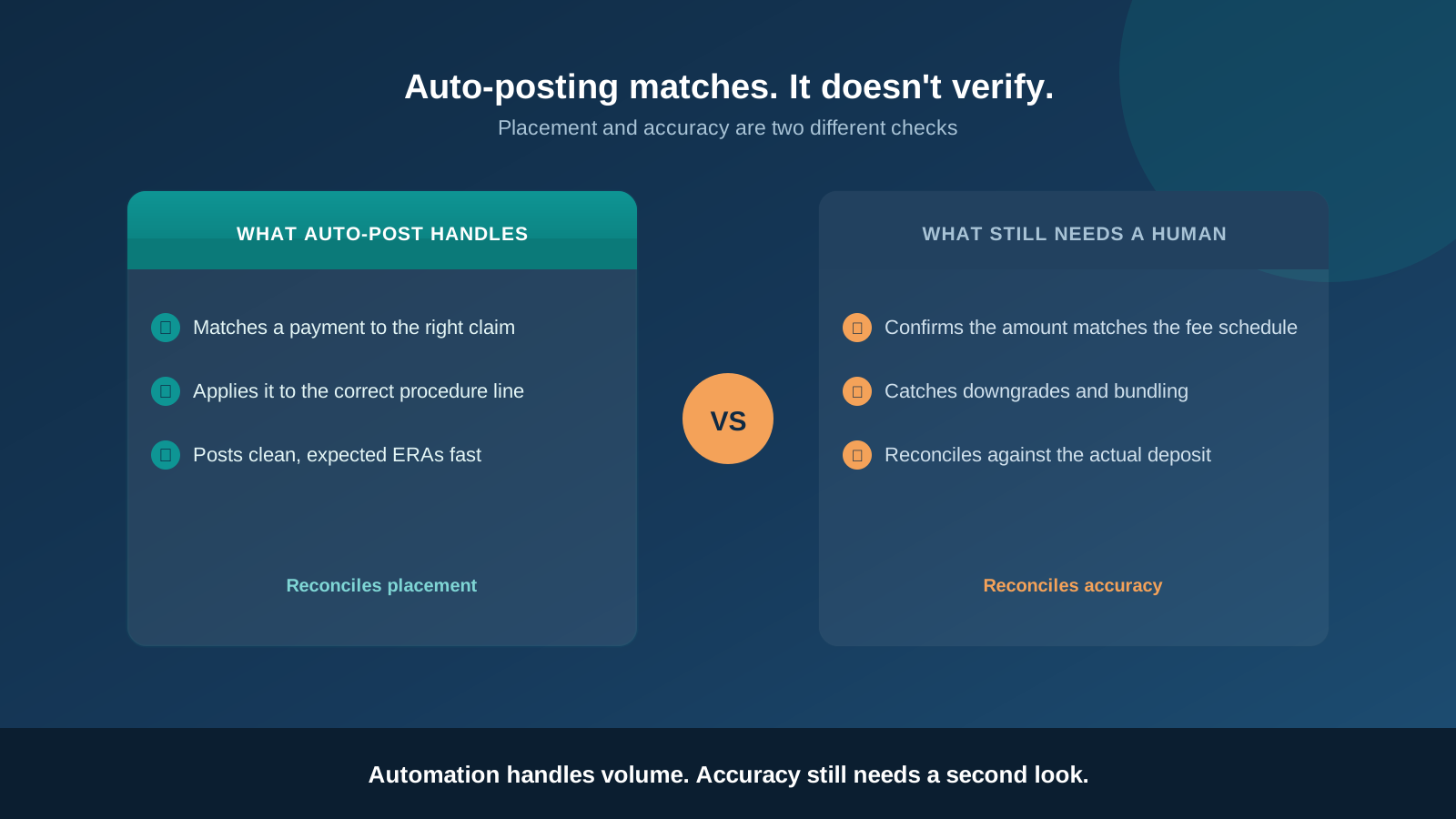
Auto-posting matches a payment to a claim. It does not verify that the payment is correct. If a carrier underpays, applies the wrong plan's allowed amount, or downgrades a procedure, auto-post will record that number exactly as sent — there's no step checking it against your actual fee schedule. The system reconciles placement, not accuracy.
Downgrades and bundling are a good example of where this shows up. When a composite filling gets paid at the amalgam rate, or two procedures get bundled into one payment, the software posts whatever the carrier sent. It doesn't flag "this doesn't match what was billed" — that's a judgment call, not a data-entry task, and judgment is exactly what automation skips.
Exceptions in general are where auto-posting breaks down. Clean, expected payments post fine. But a batch EOB with a partial payment, a takeback, a secondary claim adjustment, or a payment that doesn't match the ERA — those either kick out of auto-post entirely or get posted incorrectly and sit wrong until someone happens to notice.
And reconciliation against the actual deposit is a separate step most systems don't touch at all. Auto-post can put a number on a ledger; it doesn't confirm that money actually hit the bank, or catch a payment posted twice — or not posted at all.
So the honest way to think about this isn't manual versus automated. Automation handles volume well. What it doesn't do is check accuracy, catch exceptions, or reconcile against the bank — and those are exactly the tasks where the real money gets lost or found. See our insurance and billing services for how we handle this day to day.
What good posting looks like
A well-run posting process has a few consistent traits:
- Same-day or next-day posting, so problems surface while the claim details are still fresh and easy to fix.
- Line-by-line verification against the fee schedule, not just a glance at the total payment amount.
- A clear process for exceptions — downgrades, bundling, partial payments — instead of posting them the same way as a clean payment and sorting it out later.
- Reconciliation between the ERA/EOB and the actual deposit, so nothing gets posted that hasn't actually been received, and nothing received sits unposted.
- Patient balances that are trustworthy, so the front desk can have straightforward conversations at checkout instead of walking back numbers later.
The real cost of getting this wrong
Payment posting doesn't get the attention that claim denials or credentialing issues get, largely because it fails quietly instead of loudly. But it touches almost everything downstream — patient trust, accurate AR, clean financial reporting, and how much staff time gets spent each month cleaning up ledgers instead of moving the practice forward.
If your team is spending more time correcting old postings than posting new payments, that's usually a sign the process needs a second look — not necessarily more hands, but a tighter system.
Frequently asked questions
What is payment posting in a dental office?
Payment posting is the process of matching an insurance payment to the claim it belongs to, applying it to the correct procedures, and reconciling any difference between what was billed, what was allowed, and what was actually paid.
Doesn't practice management software already auto-post payments?
Most systems like Open Dental, Dentrix, and Eaglesoft can auto-post electronic remittance advice, but auto-posting only matches a payment to a claim. It doesn't verify that the payment is correct against your fee schedule, and it doesn't reconcile the posted amount against the actual bank deposit.
What is a downgrade in dental insurance payment posting?
A downgrade is when a carrier pays a claim as a lower-cost alternative procedure than the one performed, such as paying a composite filling at the amalgam rate. Posting has to reflect the downgrade accurately so the patient responsibility and any appeal are handled correctly.
How often should insurance payments be posted?
Same-day or next-day posting is the standard for a well-run practice. Posting promptly means problems surface while the claim details are still fresh, rather than surfacing months later as unexplained AR or incorrect patient balances.
What happens when payment posting errors go unnoticed?
Patient statements go out with the wrong balances, aging reports misrepresent actual AR, and end-of-year reconciliation becomes a much bigger project. These errors rarely trigger an obvious red flag, which is exactly why they tend to compound over time.
Stop losing revenue to quiet posting errors
Dental Claim Professionals works inside your existing practice management system — Open Dental, Dentrix, Eaglesoft, Denticon, or Softdent — to keep payment posting, AR, and claims moving accurately every day.
Book a Free Consultation