
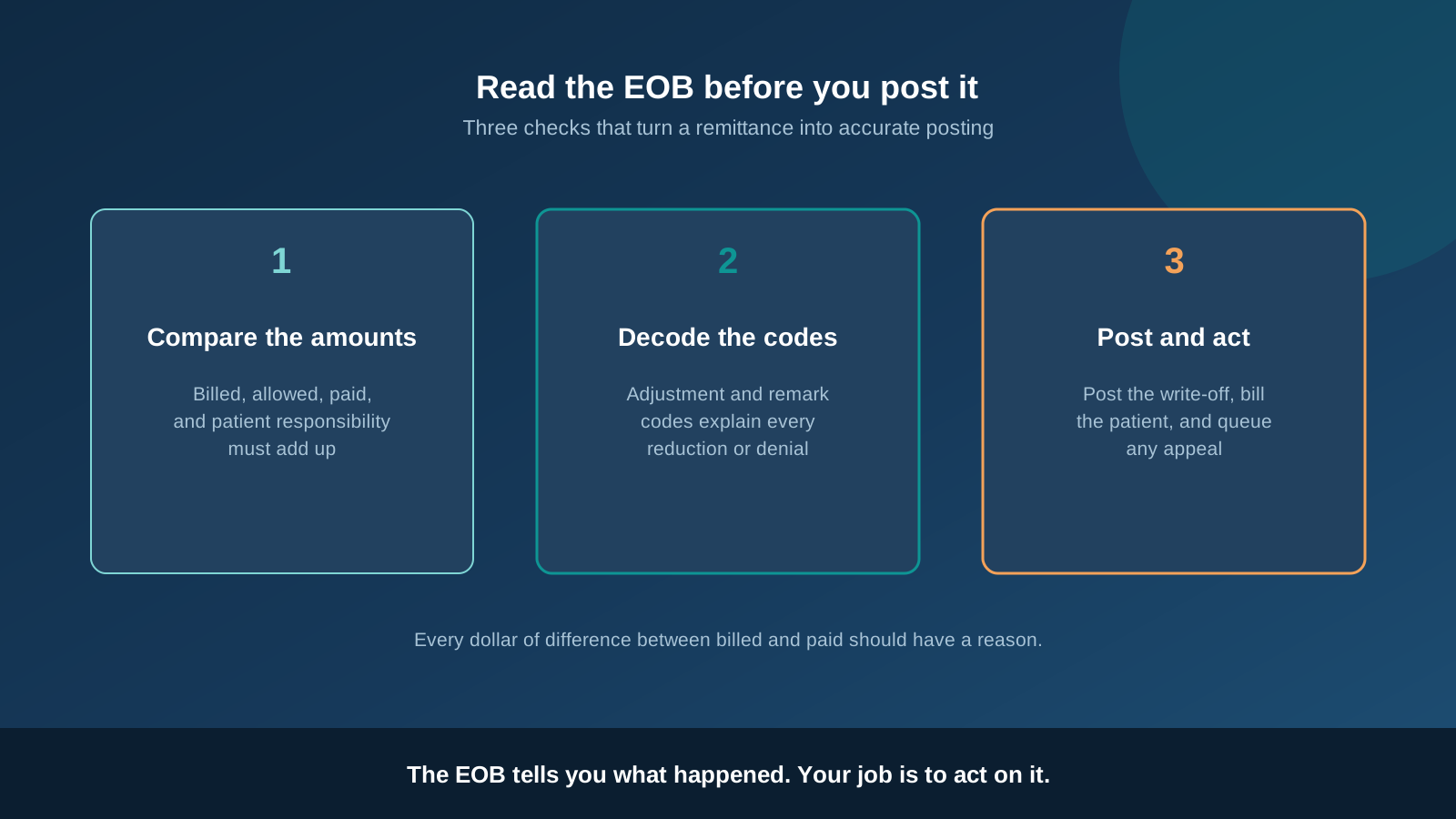
How to Read a Dental EOB and Remittance Advice Before You Post
Compare billed, allowed and paid amounts, decode adjustment codes and act on every exception.
Read the article →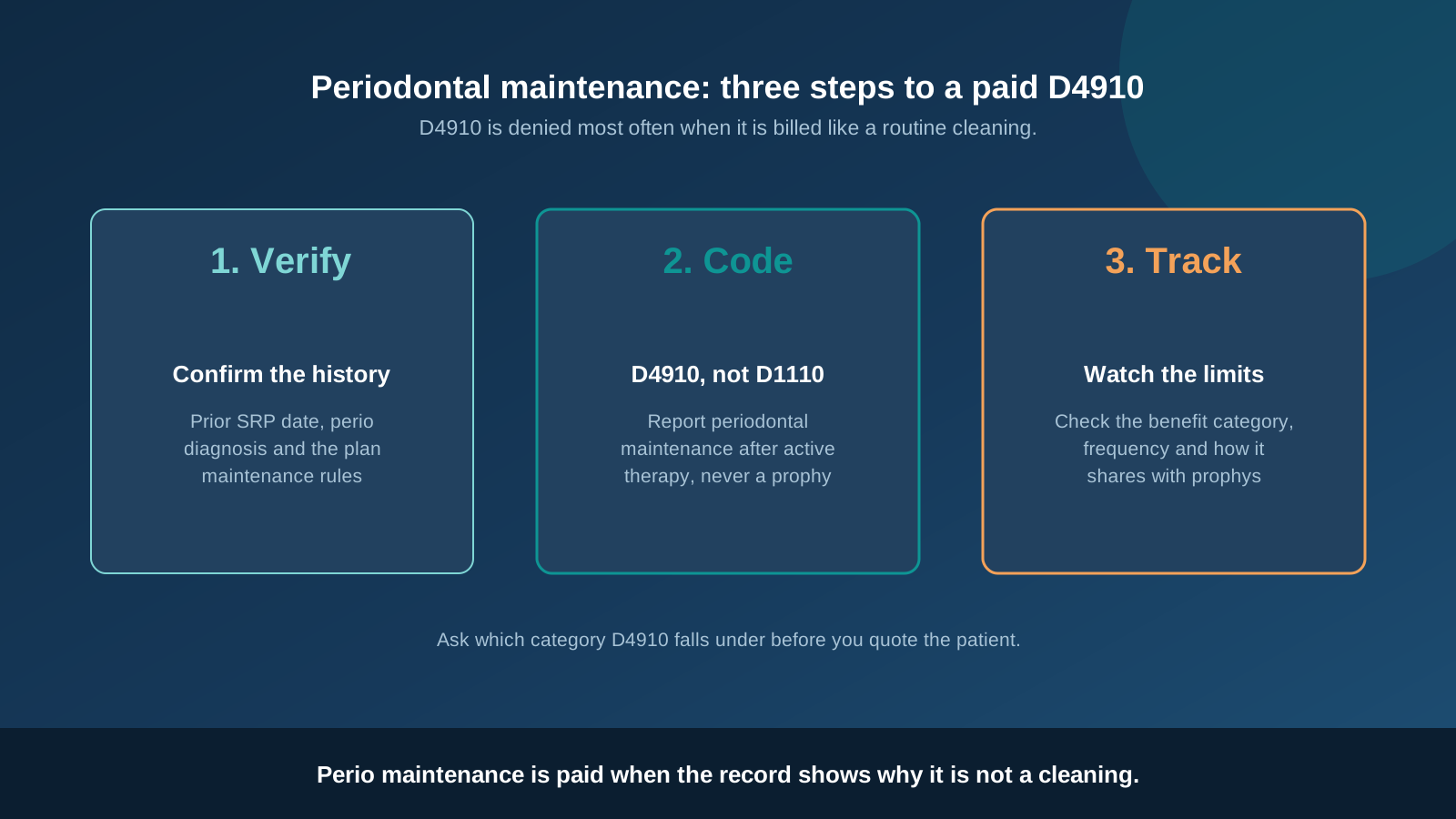
Periodontal Maintenance Billing: Getting D4910 Paid After Scaling and Root Planing
Confirm the SRP history, code D4910 instead of a prophy and verify the benefit category.
Read the article →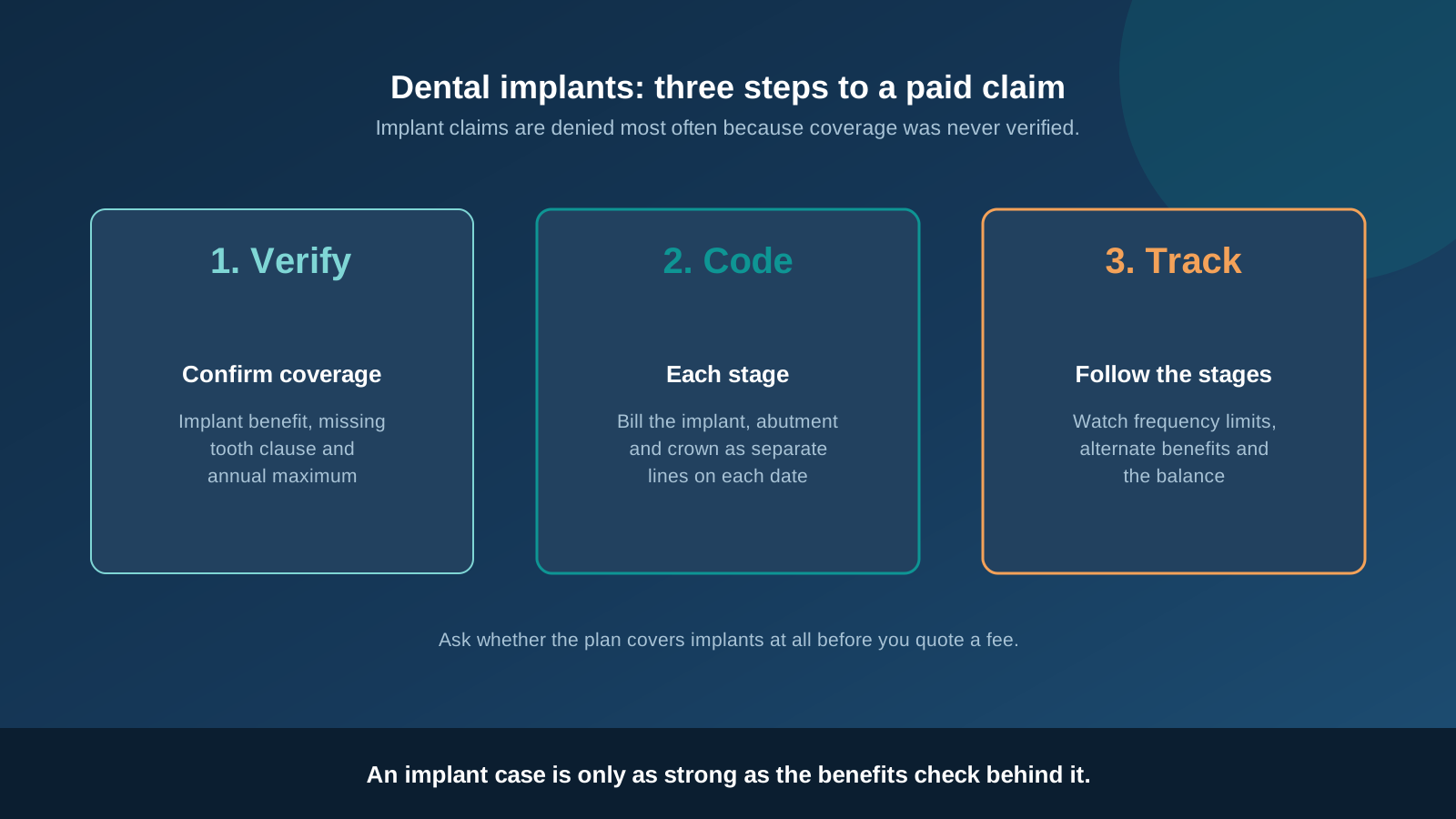
Dental Implant Billing: Coding Each Stage and Verifying Coverage
Verify the benefit, bill each stage on its own date and track the case to payment.
Read the article →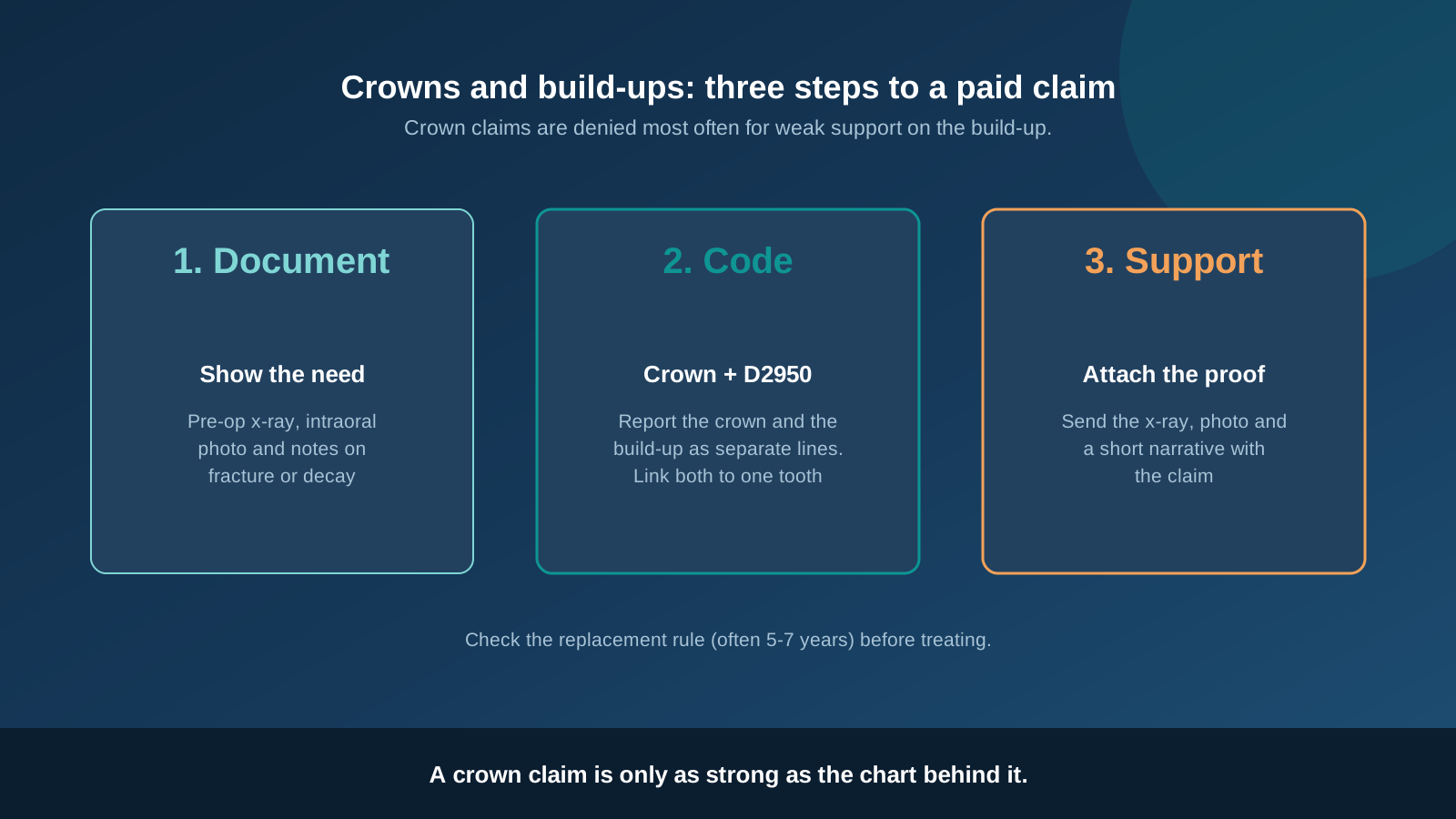
Crown and Build-Up Billing: Getting D2950 Paid Alongside the Crown
Document the need, code the crown and D2950 separately, and attach the right proof.
Read the article →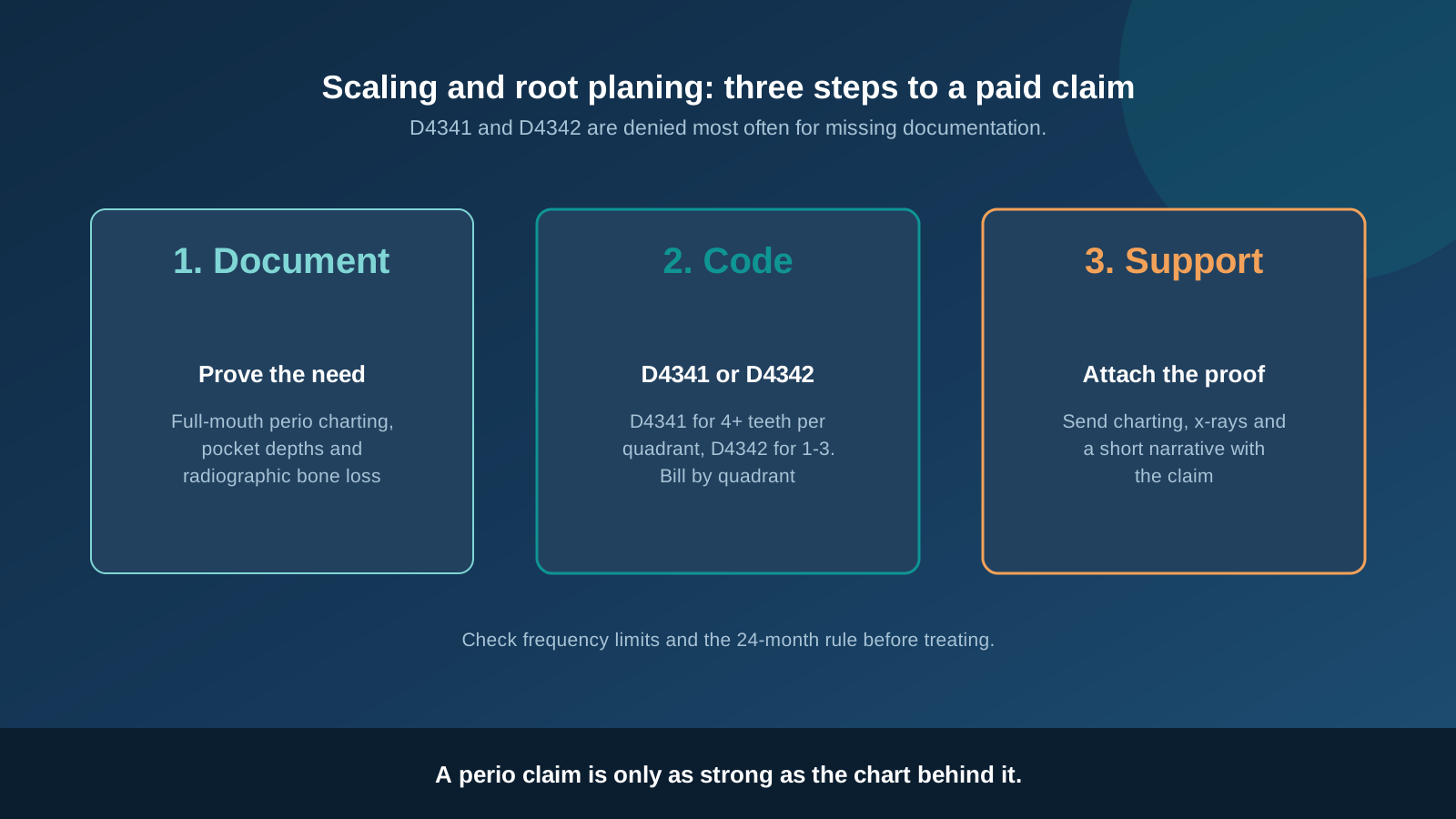
Scaling and Root Planing Billing: Documentation That Gets D4341 and D4342 Paid
Document perio need, code D4341 and D4342 by quadrant, and submit the right attachments.
Read the article →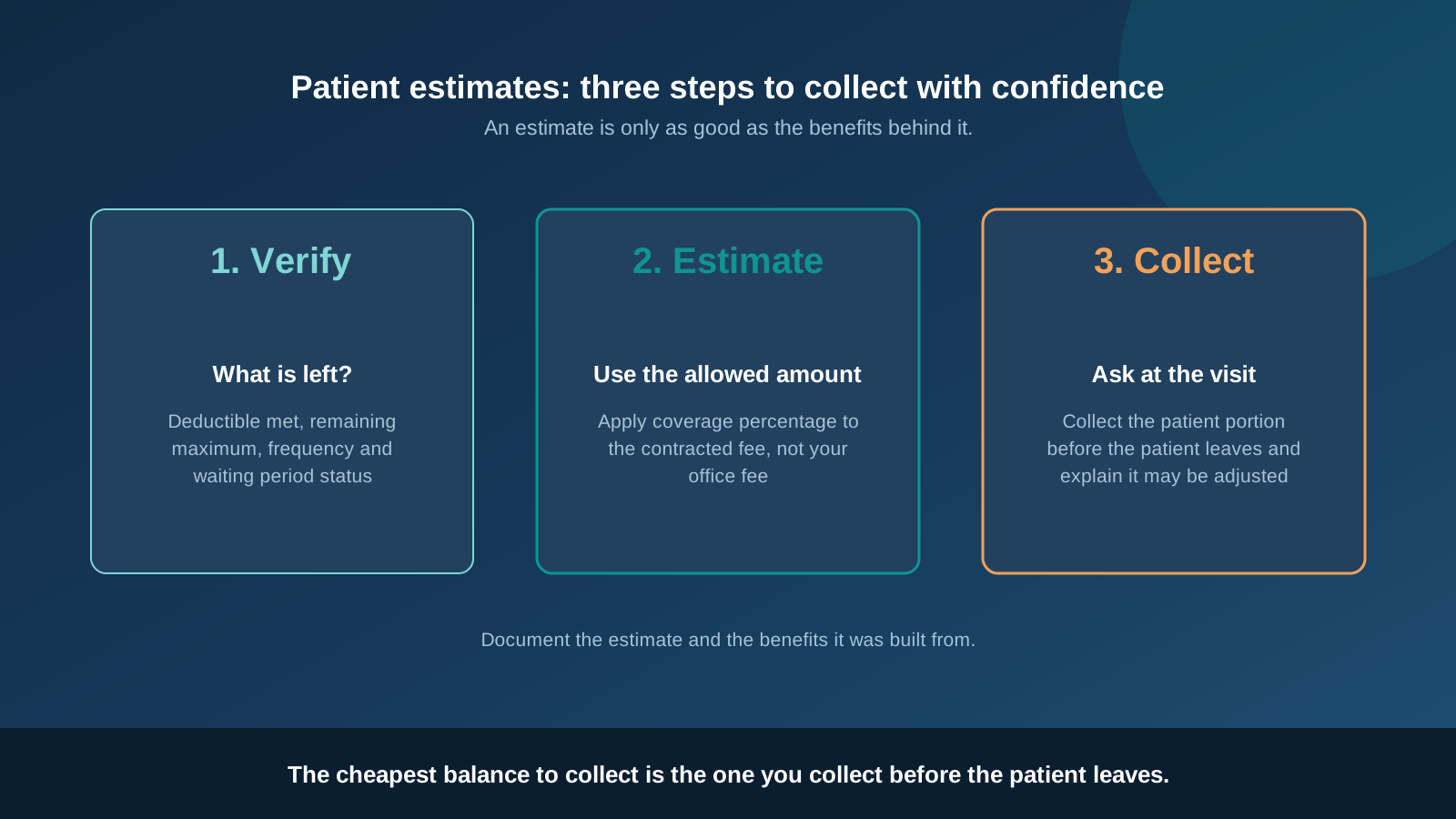
Patient Estimates and Collecting at the Visit: Getting the Patient Portion Right
Verify benefits, estimate from the allowed amount, and collect the patient portion at the visit.
Read the article →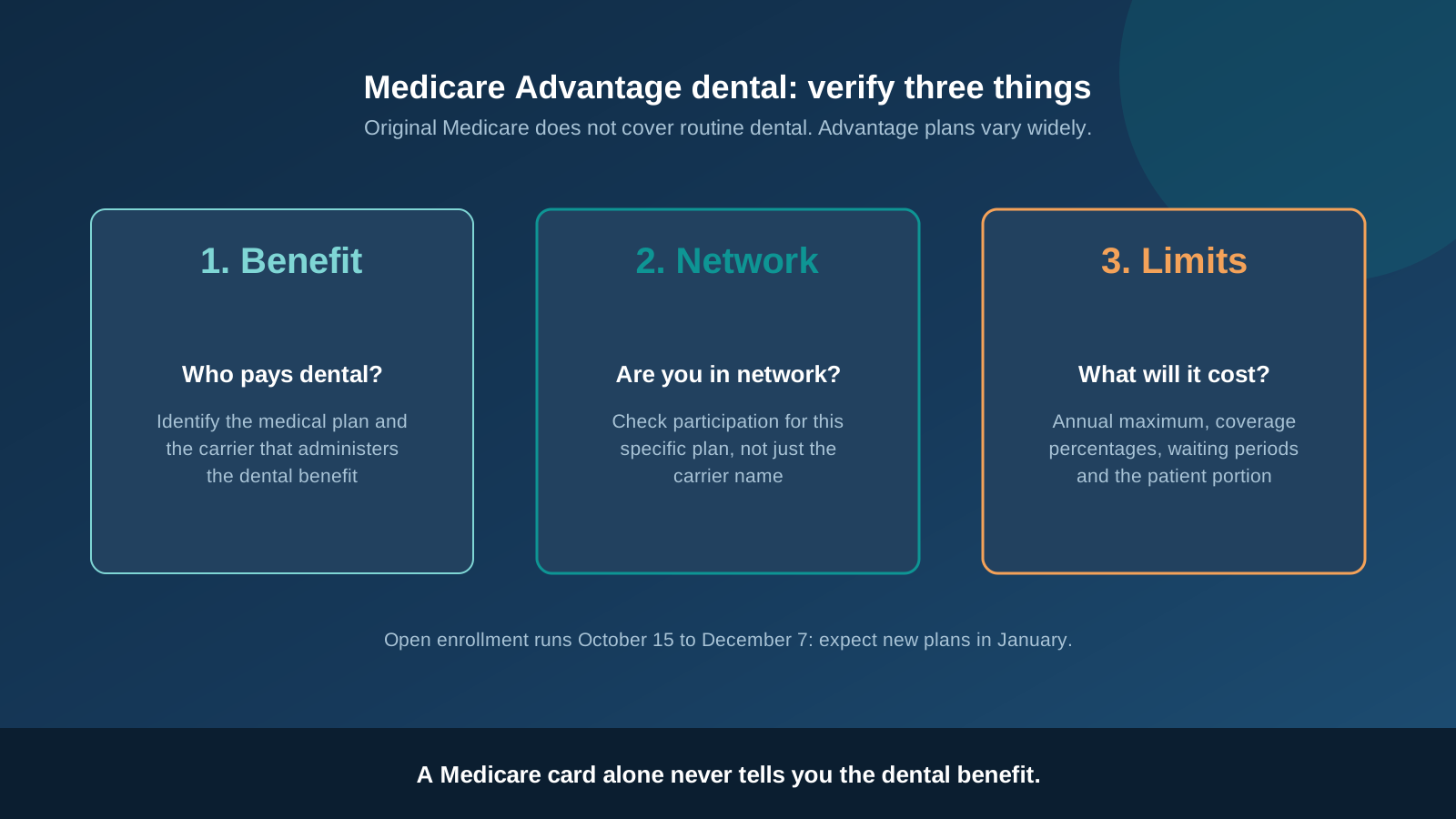
Medicare Advantage Dental Benefits: What to Verify Before Open Enrollment Brings New Patients
Open enrollment is coming. Verify the benefit, network status and plan limits before treating Medicare Advantage patients.
Read the article →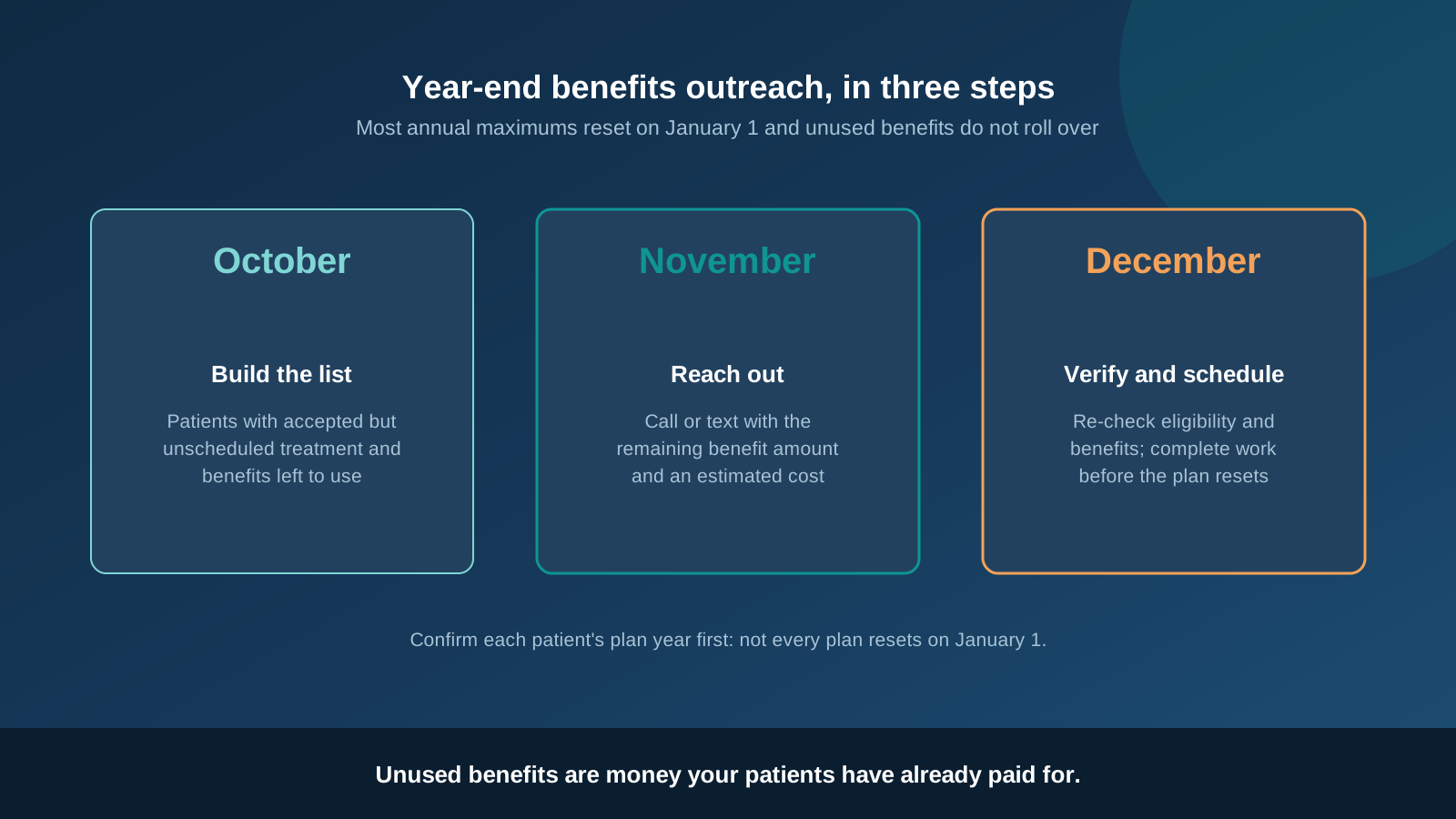
Year-End Dental Benefits: How to Help Patients Use Them Before They Reset
Annual maximums reset and unused benefits are lost. Plan October-to-December outreach with accurate numbers.
Read the article →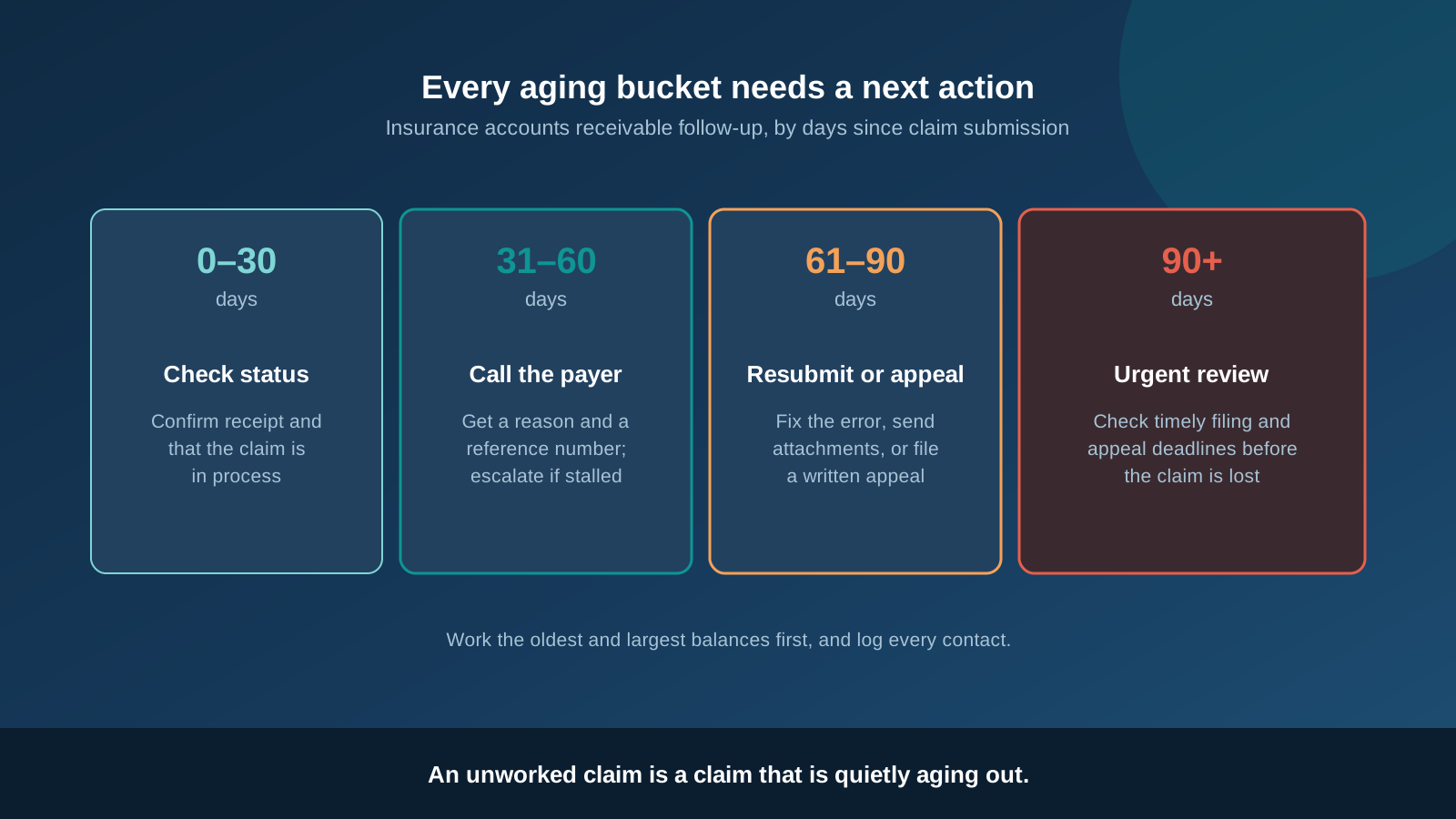
Insurance Claim Follow-Up: How to Work Your Aging Report Before Claims Expire
Unpaid claims quietly age out. Set a next action for every aging bucket and protect filing and appeal deadlines.
Read the article →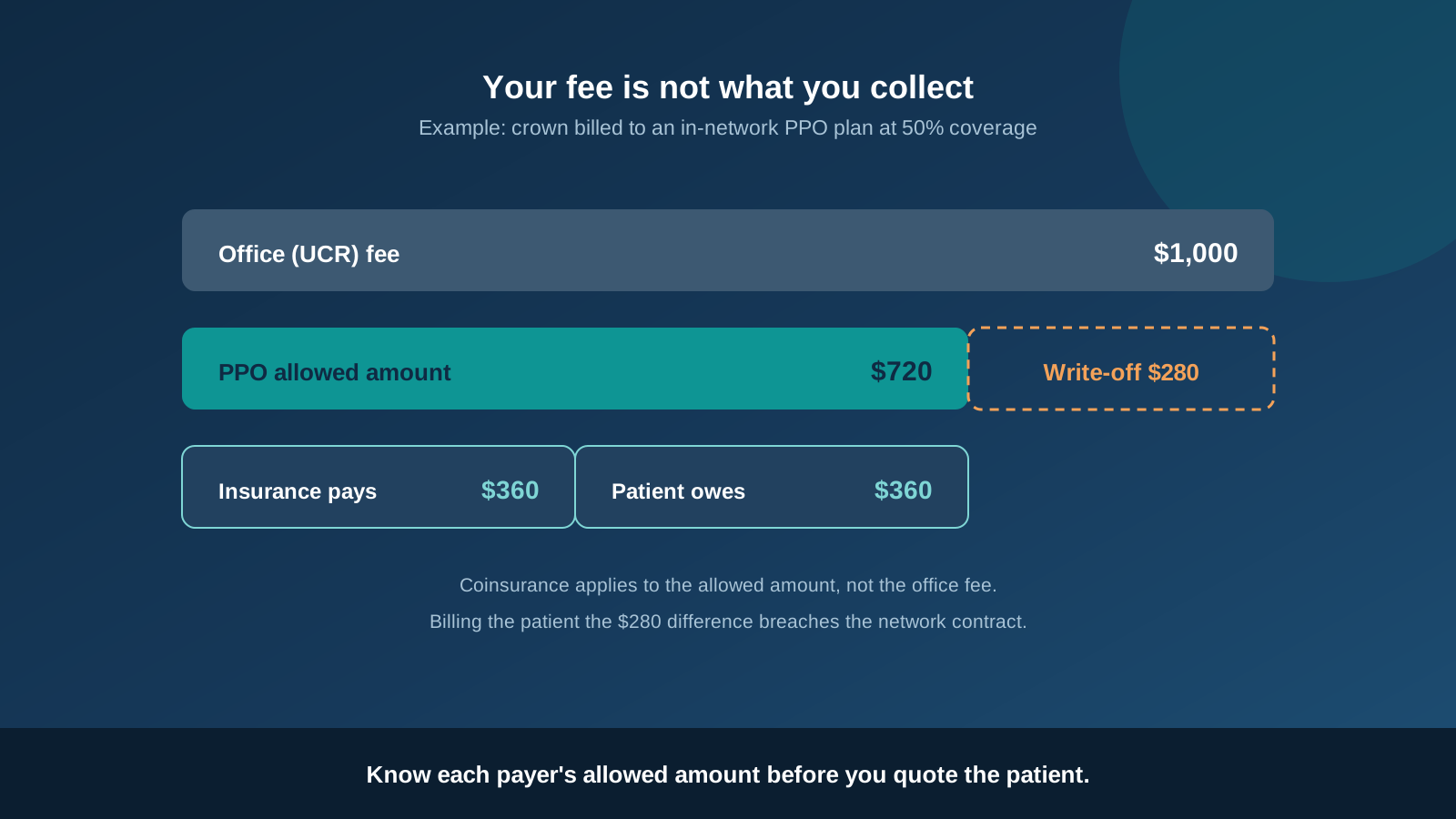
Contractual Write-Offs: Why Your Fee Isn't What You Collect
Plans pay a percentage of the allowed amount, not your office fee. Here's how write-offs work and how to quote patients correctly.
Read the article →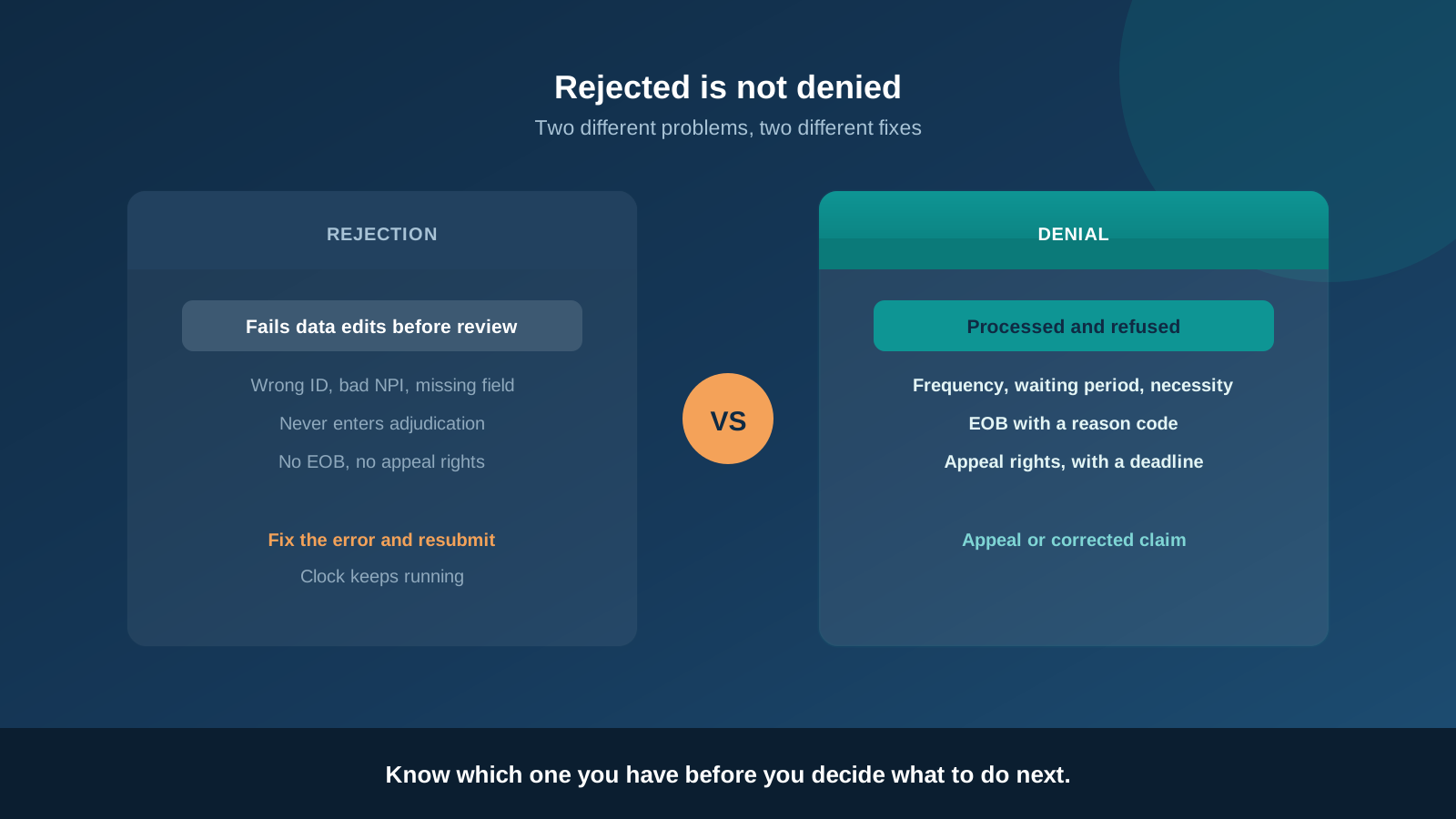
Claim Rejections vs. Denials: Why the Difference Changes Your Next Step
A rejected claim never reached the payer's review; a denied one did. Here's how to tell them apart and fix each.
Read the article →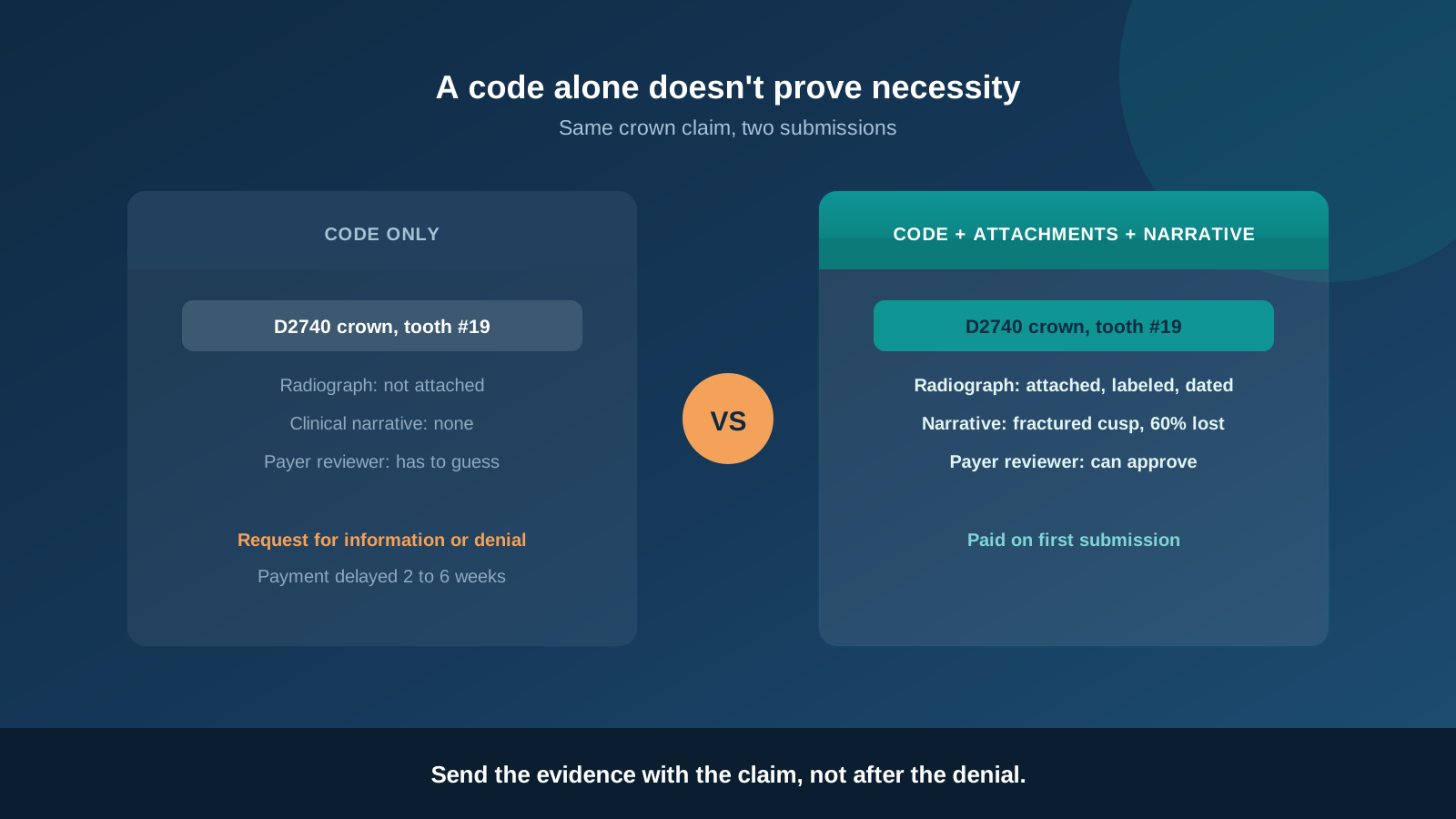
Claim Attachments and Narratives: Send the Evidence With the Claim
A procedure code doesn't prove necessity. Here's which attachments and narratives to send so claims pay the first time.
Read the article →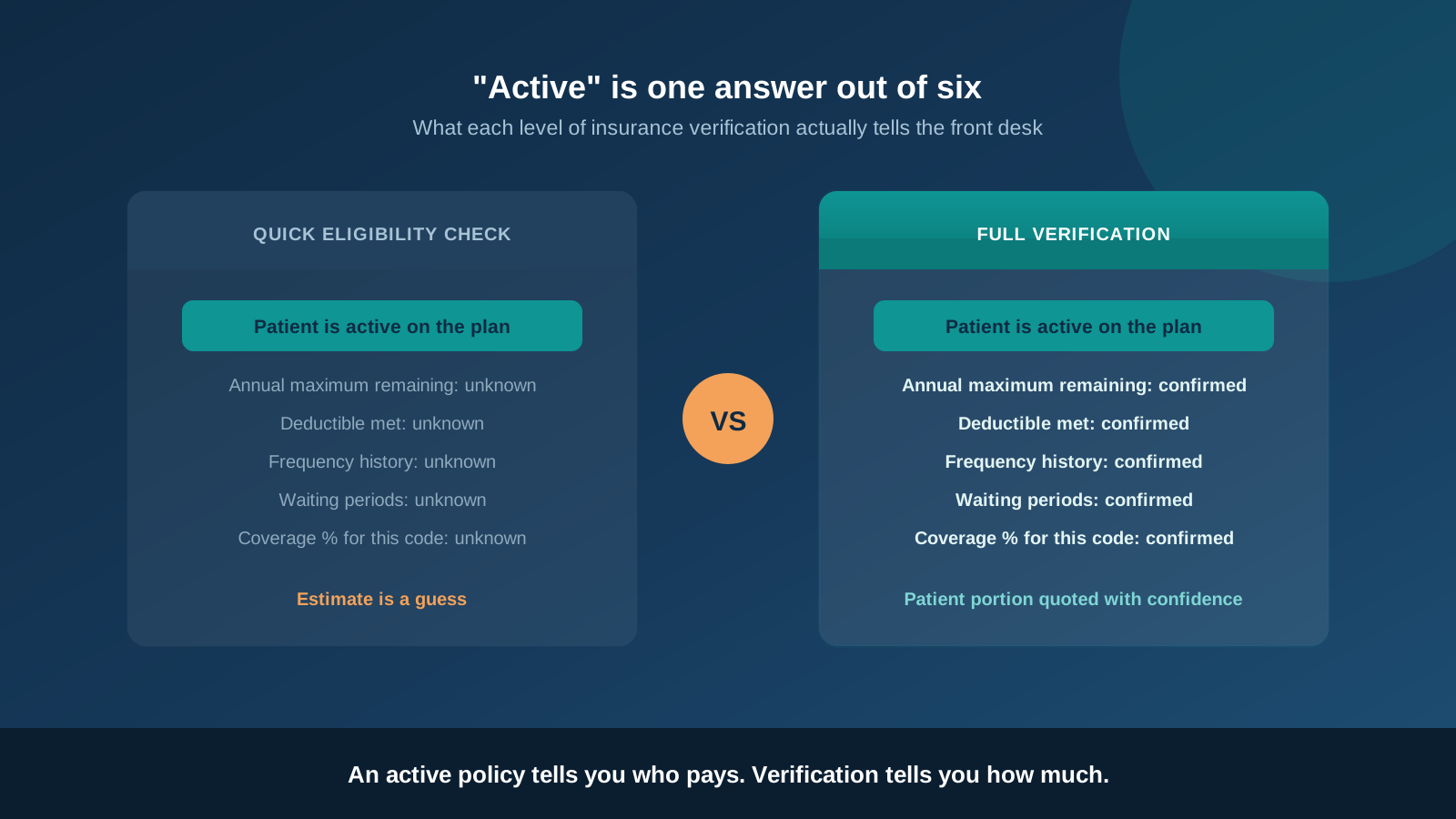
Insurance Eligibility Verification: Why “Active” Doesn't Mean Covered
A quick eligibility check only confirms a patient is active. Here's what full verification covers and how gaps turn into write-offs.
Read the article →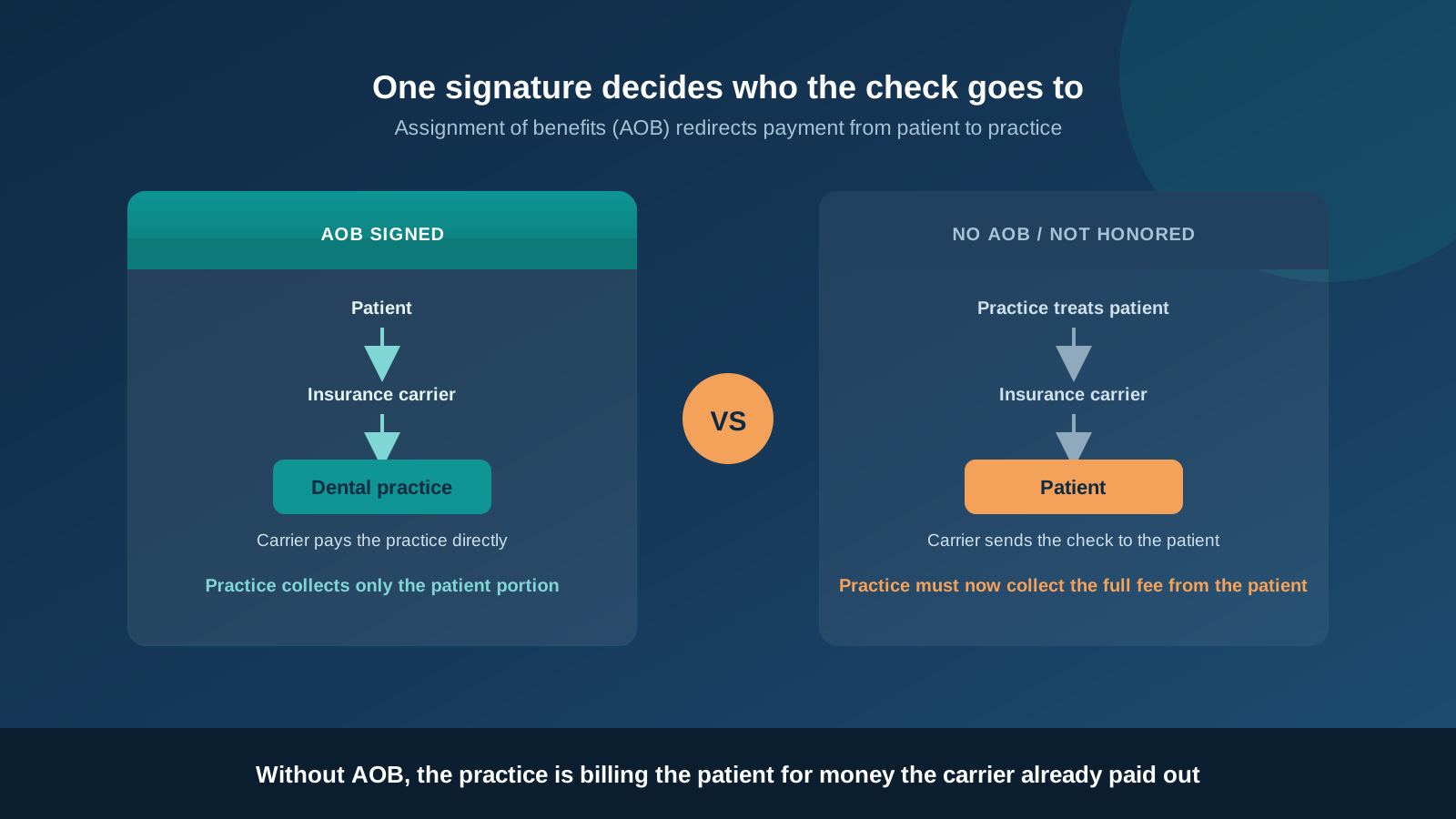
Assignment of Benefits in Dental Insurance: Why One Signature Decides Who Gets Paid
A signed AOB routes the insurance check to your practice. Here's where carriers ignore it anyway, and how to keep unassigned claims from stalling cash flow.
Read the article →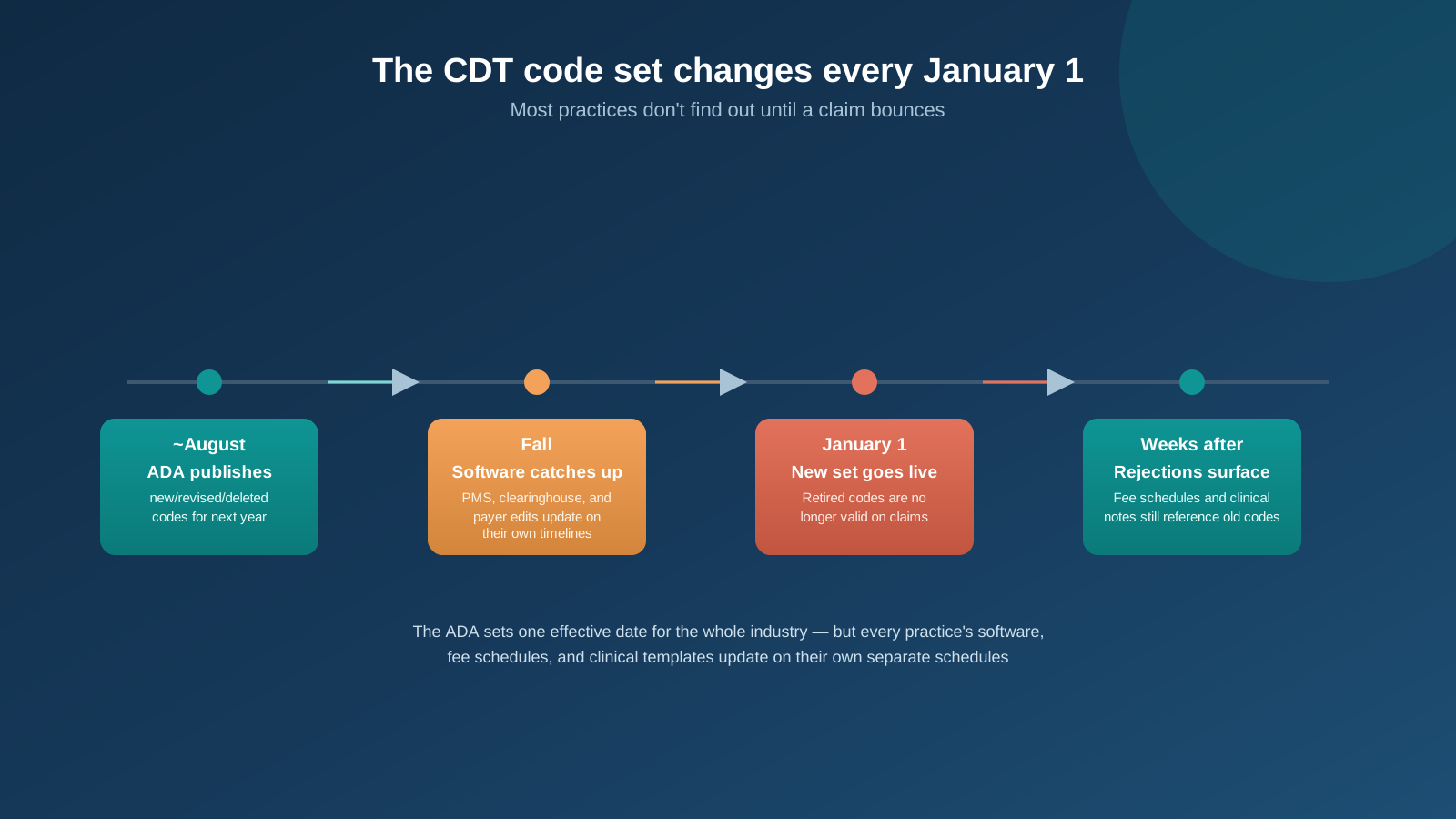
The Annual CDT Code Update: How Dental Practices Should Prepare Before January 1
The CDT code set changes every January 1, but practice management software, fee schedules, and clinical templates don't all catch up on the same timeline. Here's how to get ahead of it.
Read the article →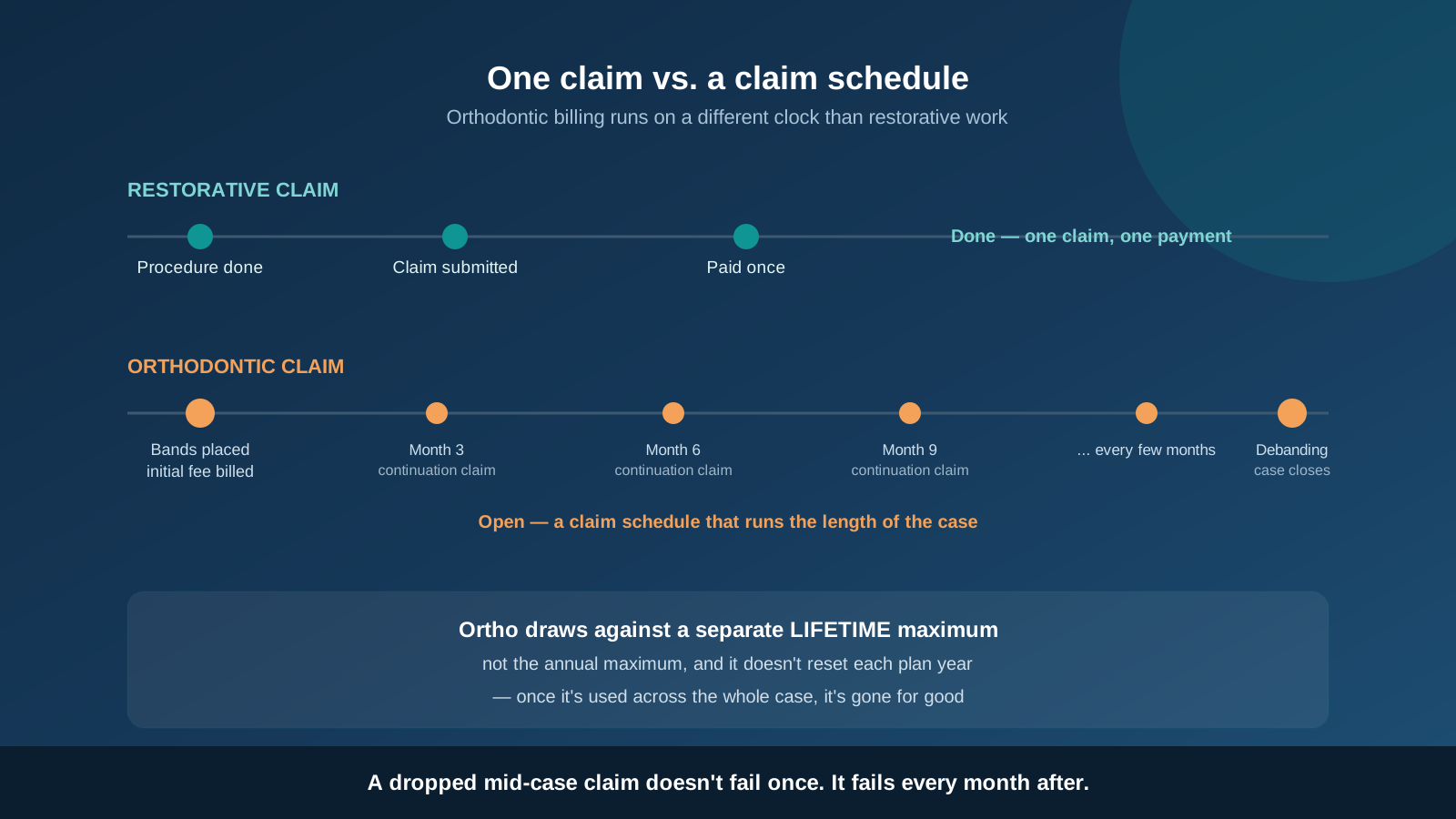
Orthodontic Insurance Billing: Why a Case Is a Claim Schedule, Not a Single Claim
An orthodontic case bills as an upfront banding fee plus continuation claims against a separate lifetime maximum. Here's where that schedule breaks and how to keep it on track.
Read the article →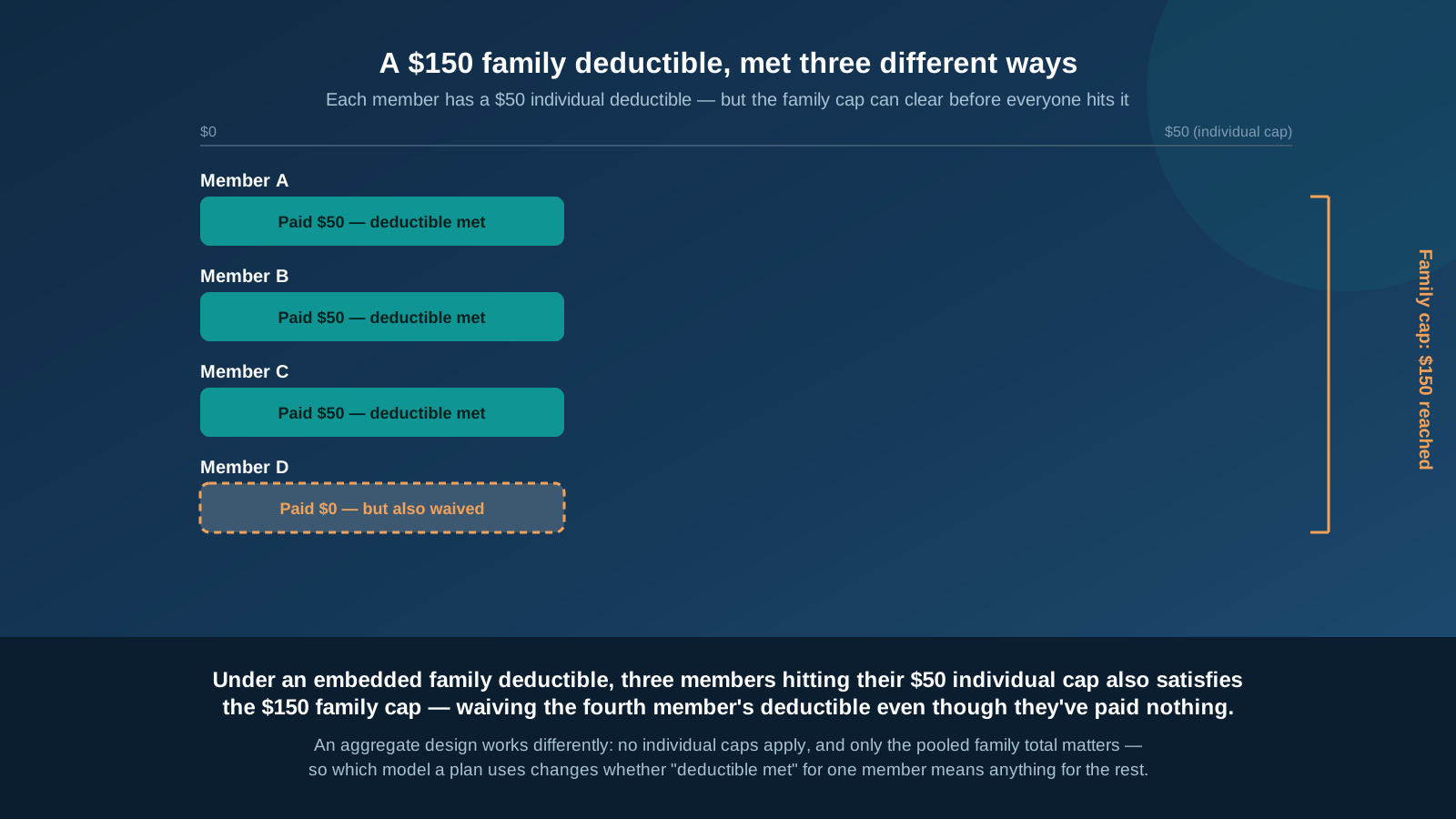
Dental Insurance Deductibles: Why "Met" for One Family Member Doesn't Always Mean What You Think
Embedded and aggregate family deductibles can settle the exact same claims history two different ways. Here's how the models differ and how to verify which one applies before giving a patient estimate.
Read the article →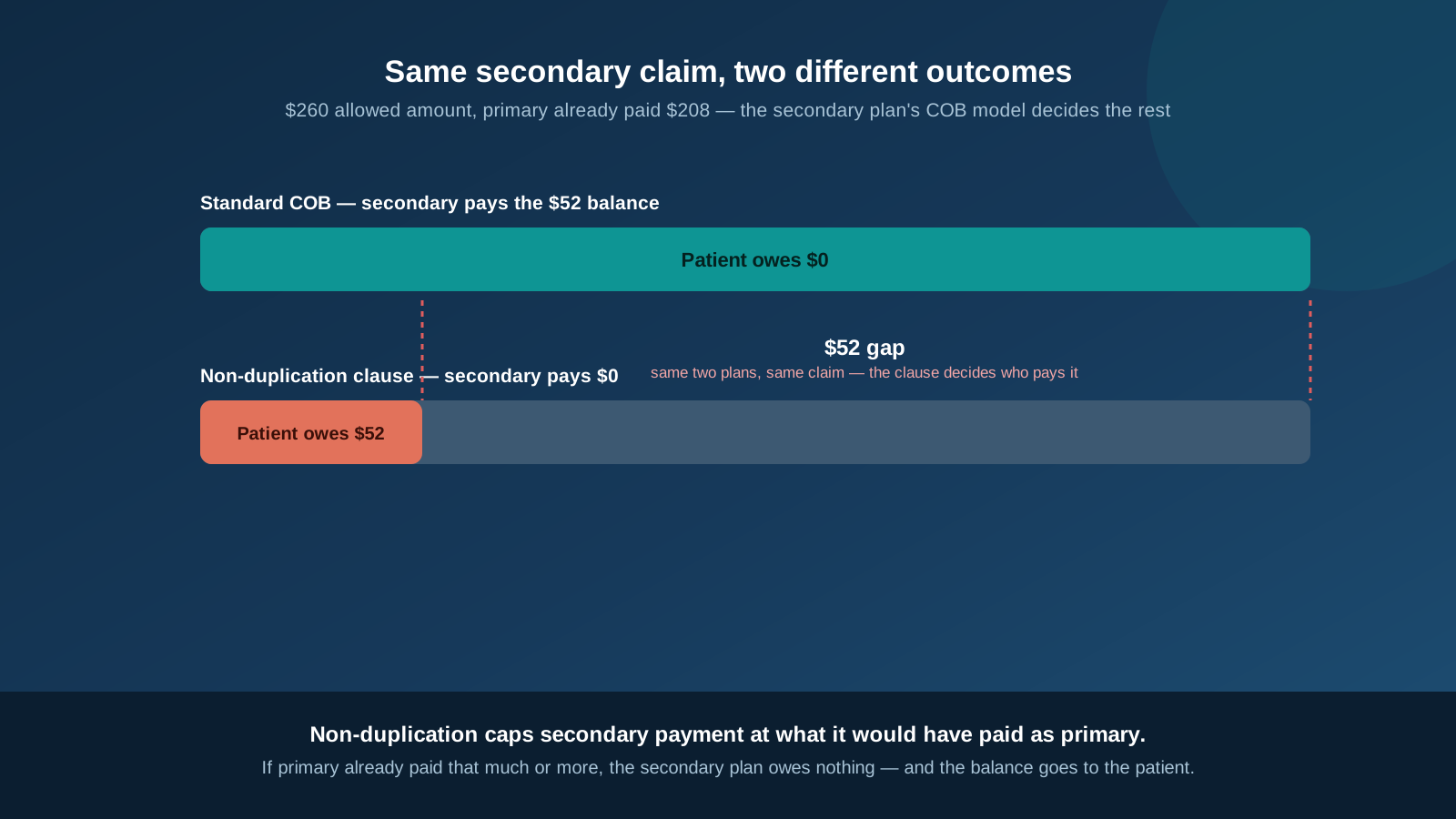
The Non-Duplication of Benefits Clause: Why a Secondary Dental Plan Sometimes Pays $0
A non-duplication clause caps secondary payment at what it would have paid as primary — and if primary already paid that much, secondary pays nothing. Here's how the math works and how to catch it before treatment.
Read the article →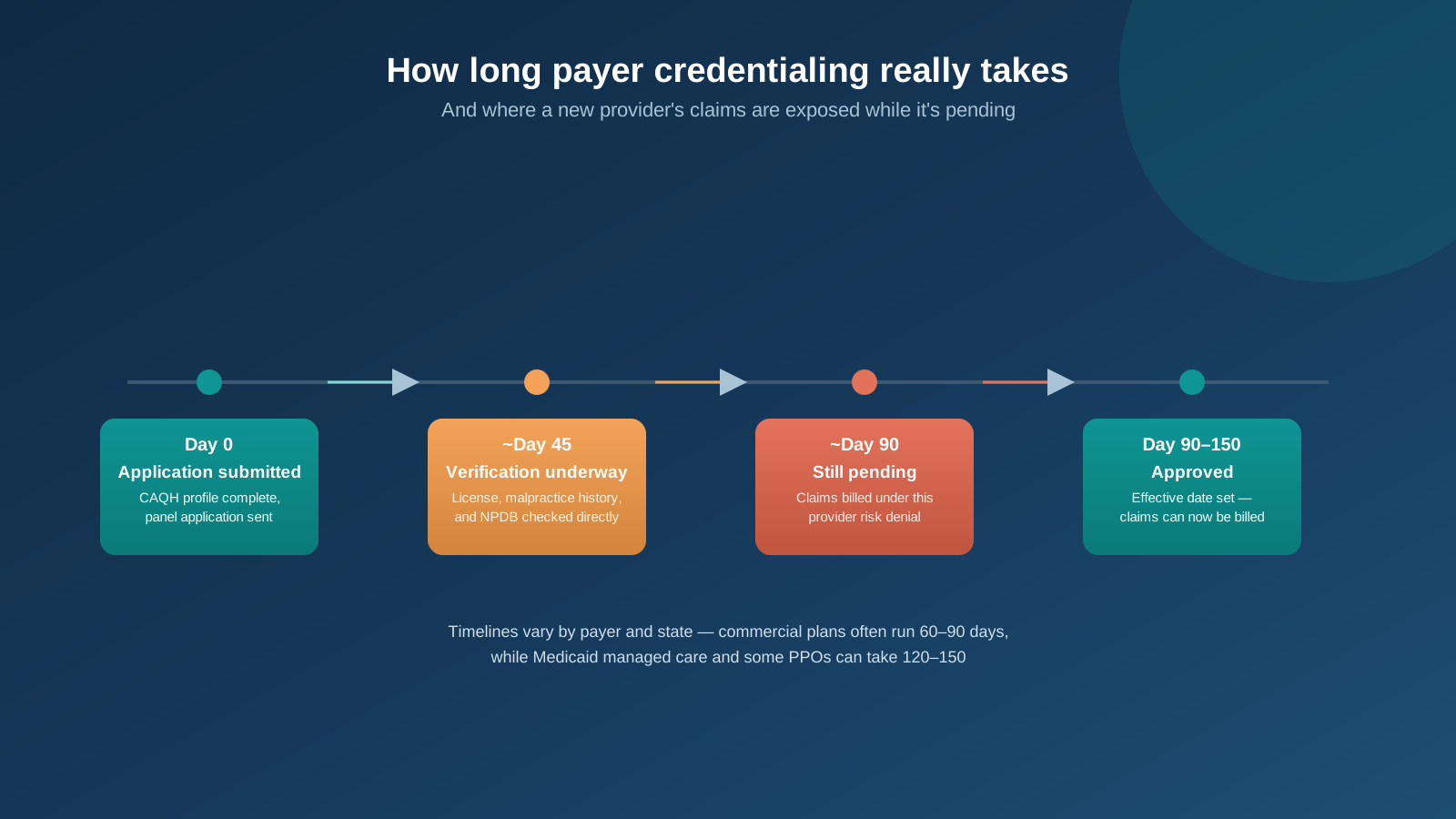
Payer Credentialing Delays: How to Keep a New Provider's Claims From Piling Up
Credentialing a new associate with each payer can take 60 to 150 days. Here's why it takes that long, what happens to claims billed too early, and how to protect cash flow while an application is pending.
Read the article →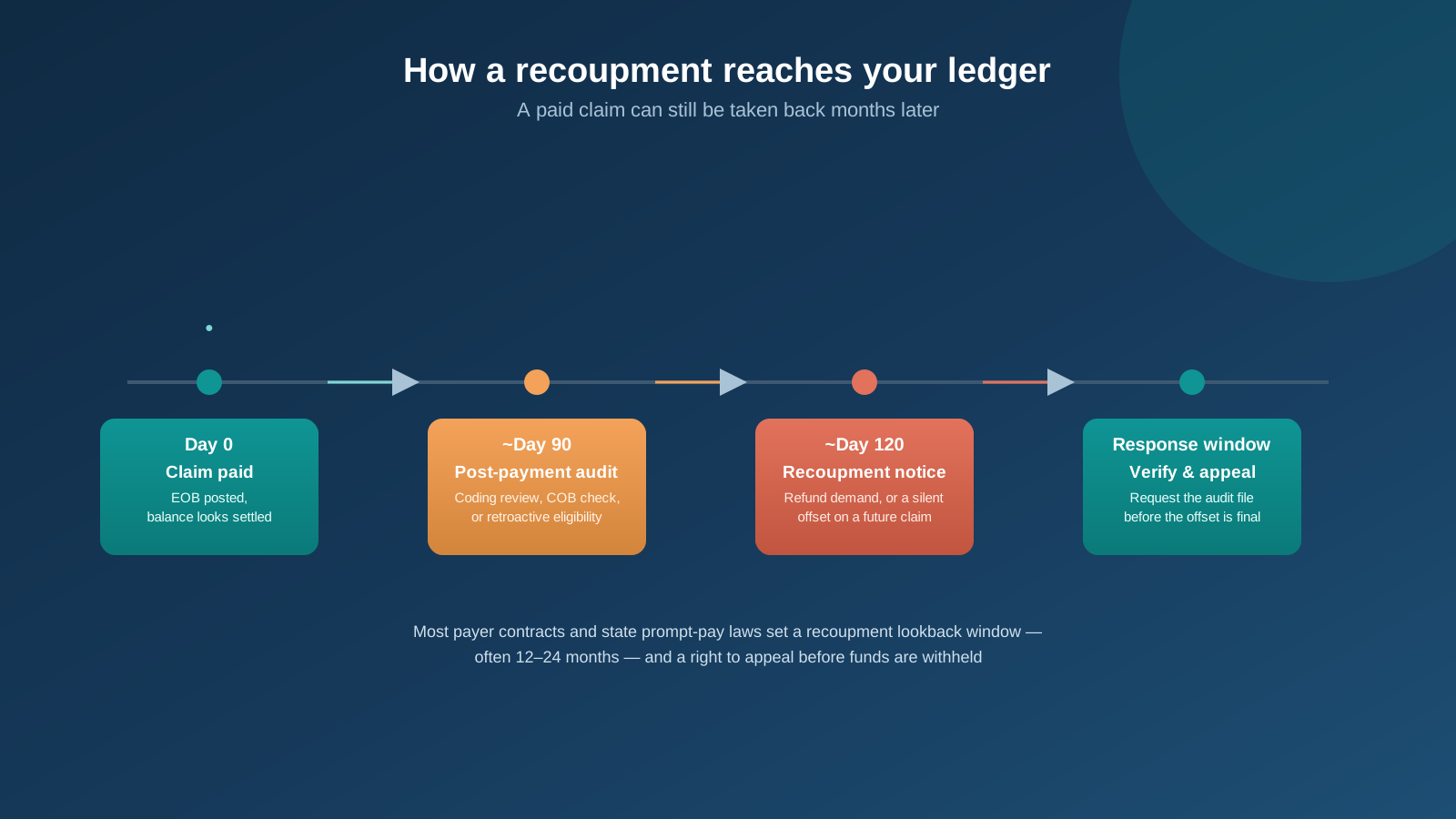
Dental Insurance Recoupments: What to Do When a Payer Asks for Money Back
A paid claim isn't always final. Here's why dental insurers recoup payments months later, how the offset hits your ledger, and how to respond before it's final.
Read the article →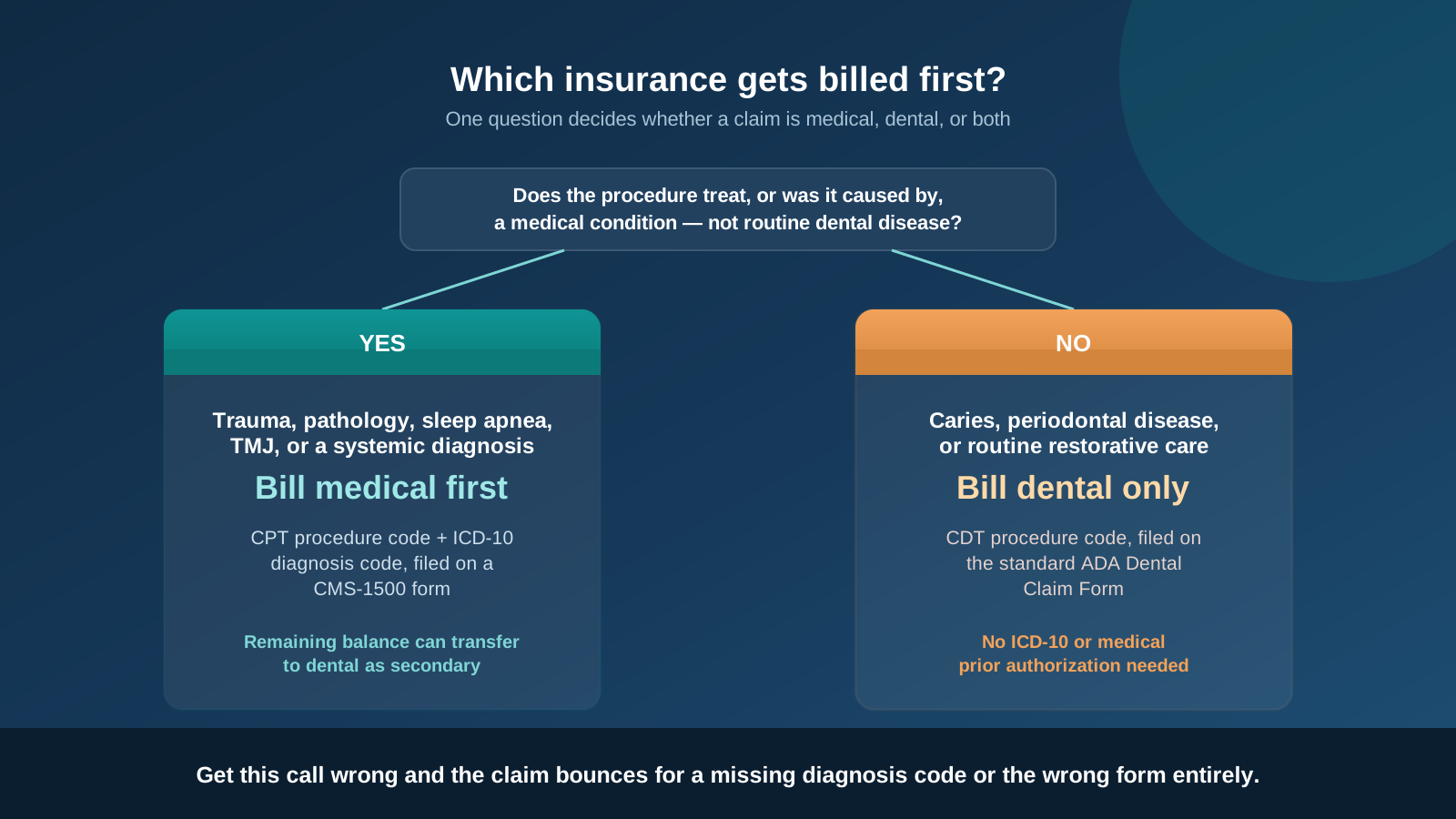
Medical Cross-Coding: When to Bill a Dental Procedure to Medical Insurance
Trauma, pathology, sleep apnea appliances, and TMJ treatment can often be billed to medical insurance instead of dental. Here's how to tell which procedures qualify and where cross-coded claims go wrong.
Read the article →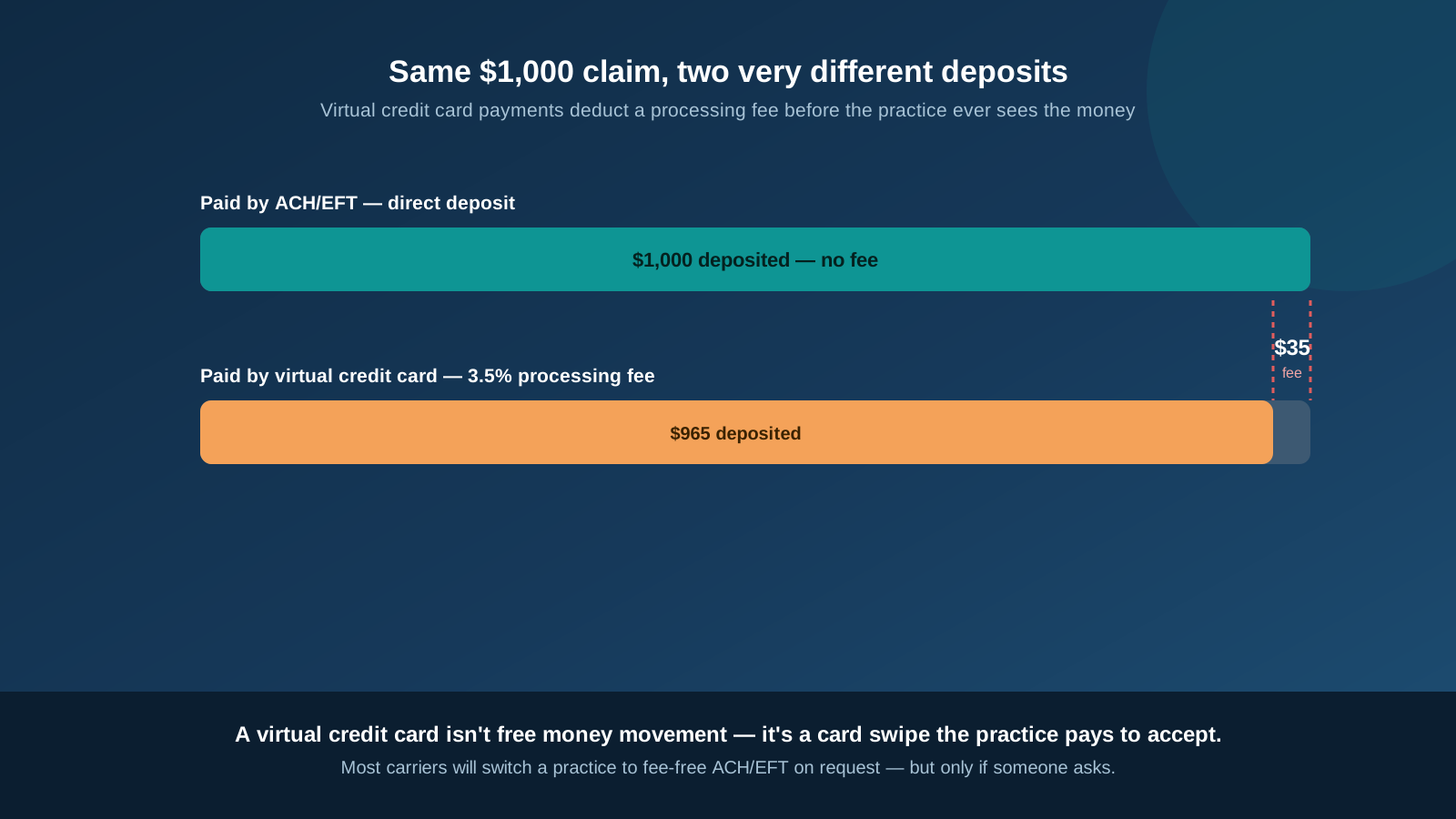
Virtual Credit Card Payments in Dental Insurance: What the 3-5% Fee Is Really Costing You
Every VCC reimbursement is run as a card transaction that costs the practice a 3-5% processing fee. Here's how to catch it and switch to fee-free ACH/EFT.
Read the article →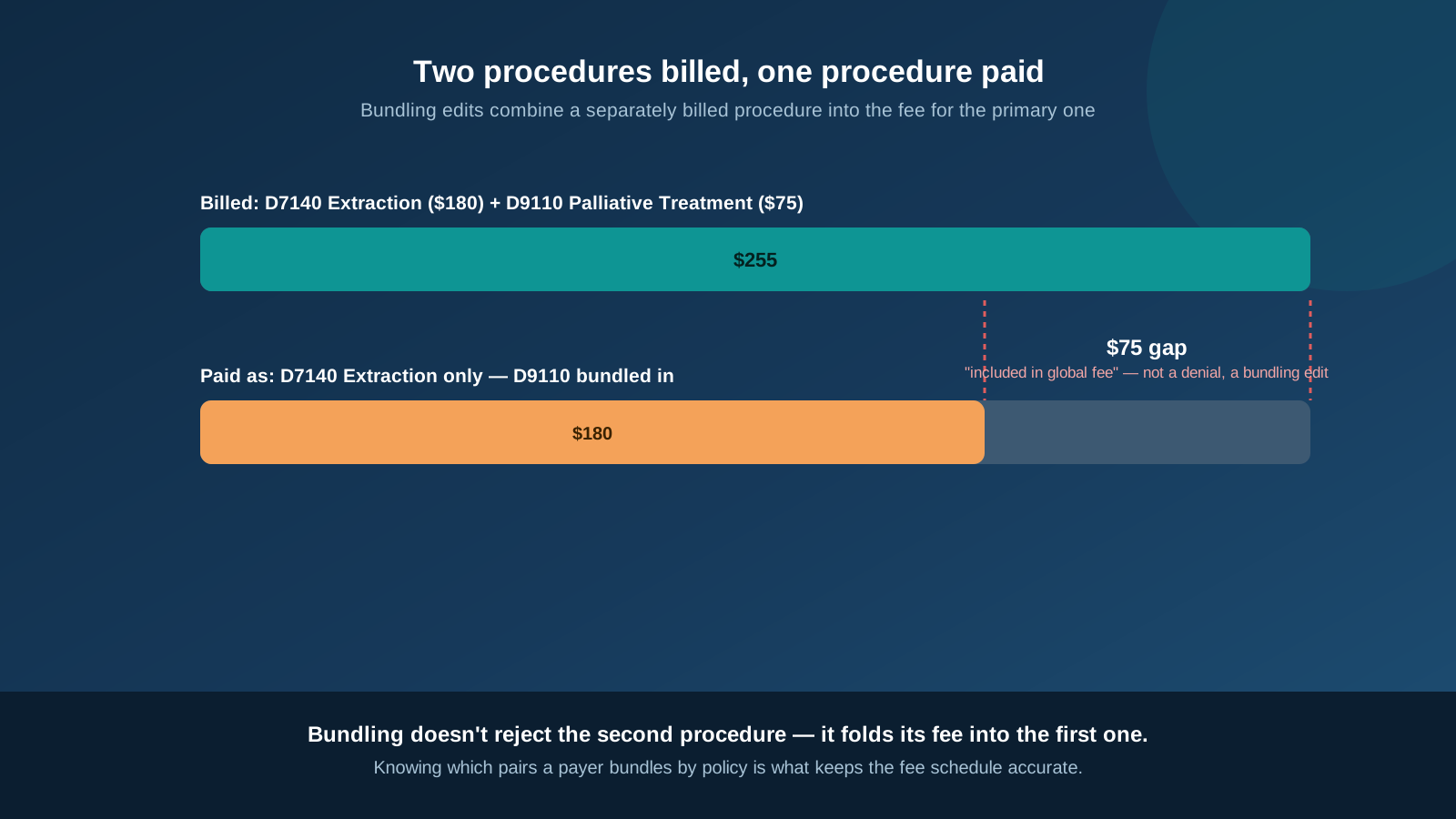
Bundling and Unbundling in Dental Claims: Why Two Codes Paid as One
Bundling folds a separately billed procedure into the fee for another one, and it isn't always a mistake. Here's which pairs get bundled most often and when a bundle is actually worth appealing.
Read the article →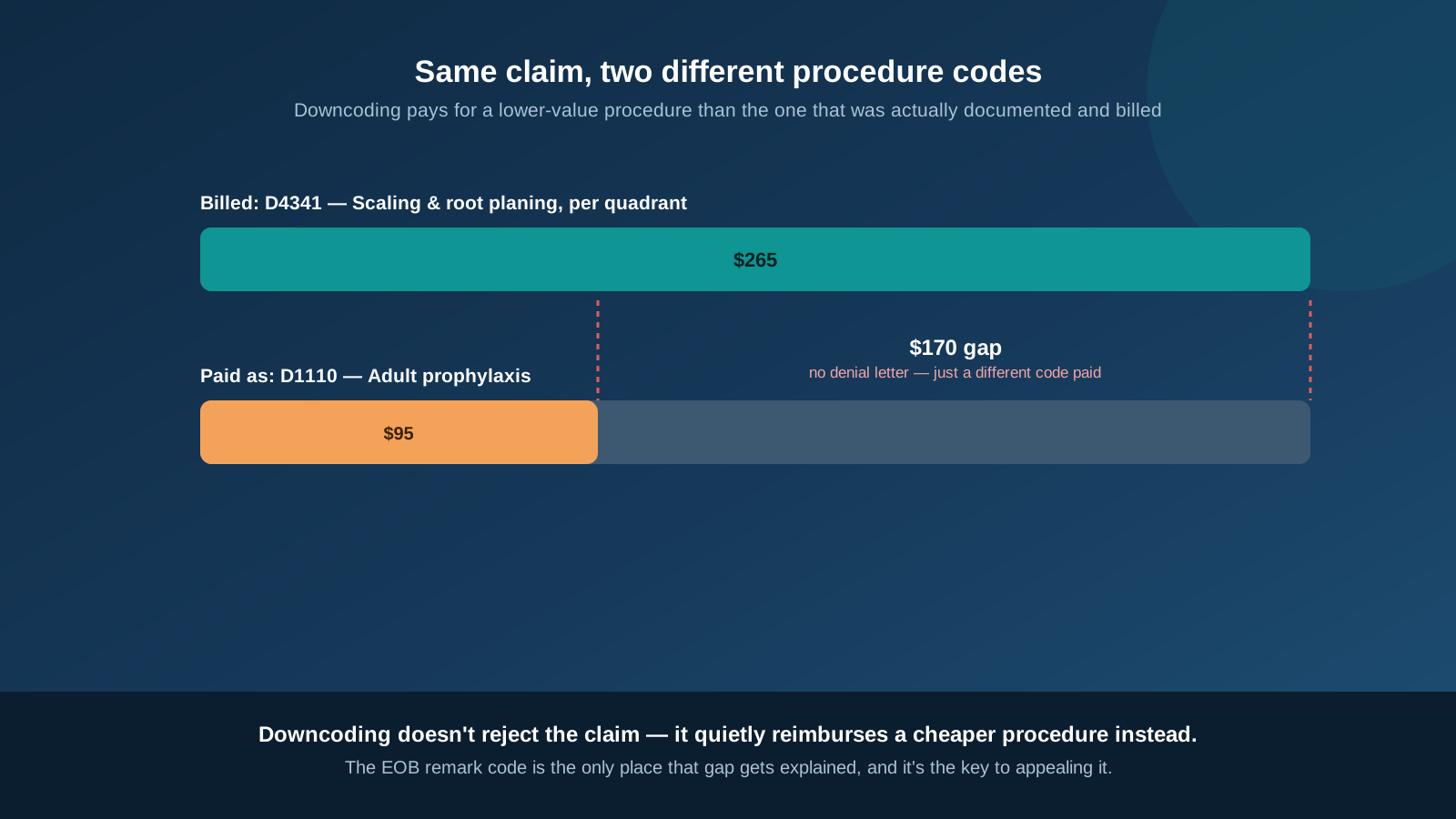
Downcoding in Dental Claims: Why the Insurer Paid a Different Code Than You Billed
Downcoding doesn't deny a claim — it quietly reimburses it as a cheaper procedure instead. Here's where it happens most often and how to appeal it with the documentation reviewers actually need.
Read the article →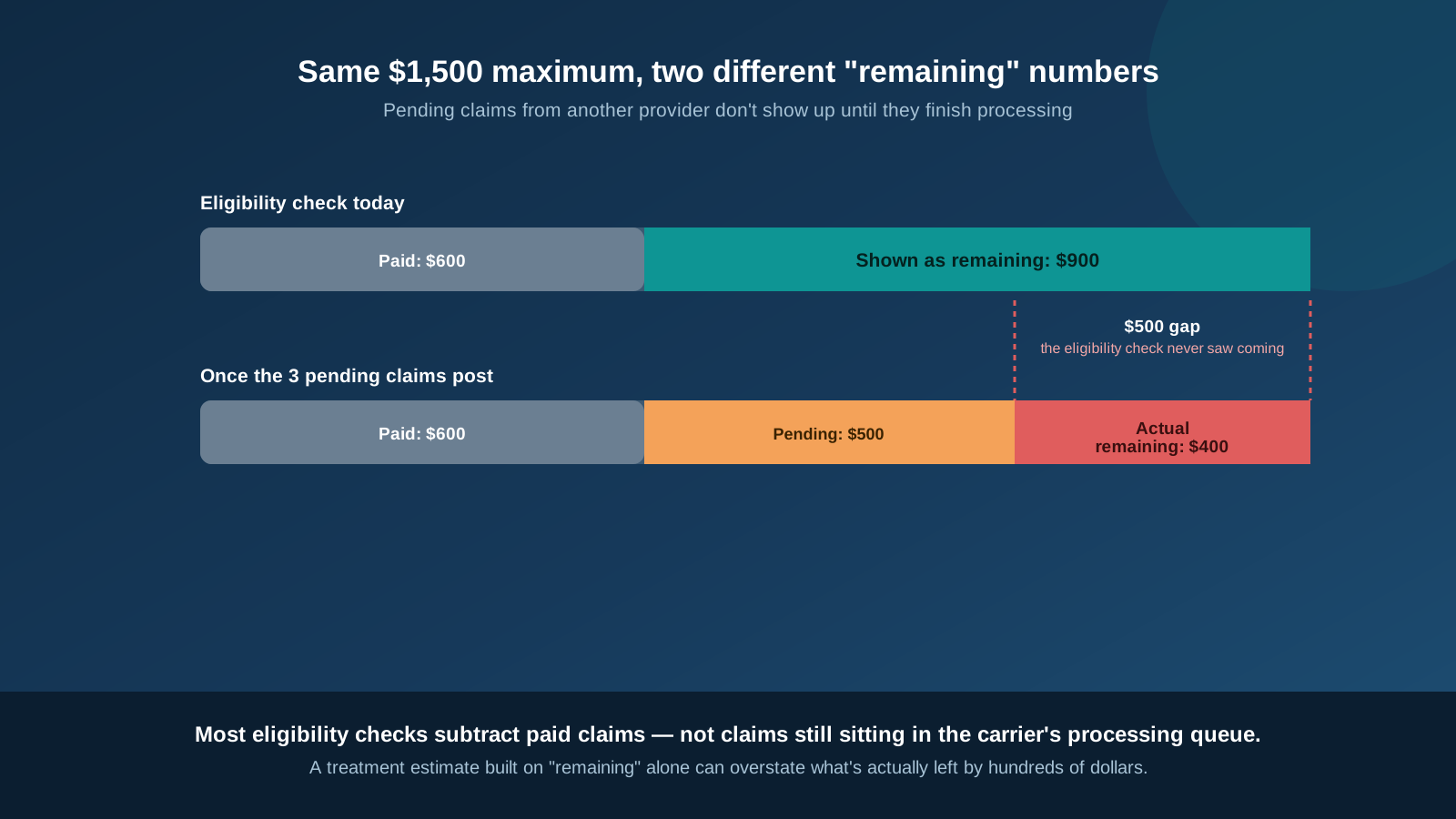
Annual Maximums in Dental Insurance: Why "Remaining Benefits" Isn't a Fixed Number
The remaining-benefits figure on an eligibility check usually only subtracts paid claims — not claims still sitting in a carrier's processing queue. Here's where that gap opens up and how to keep estimates accurate.
Read the article →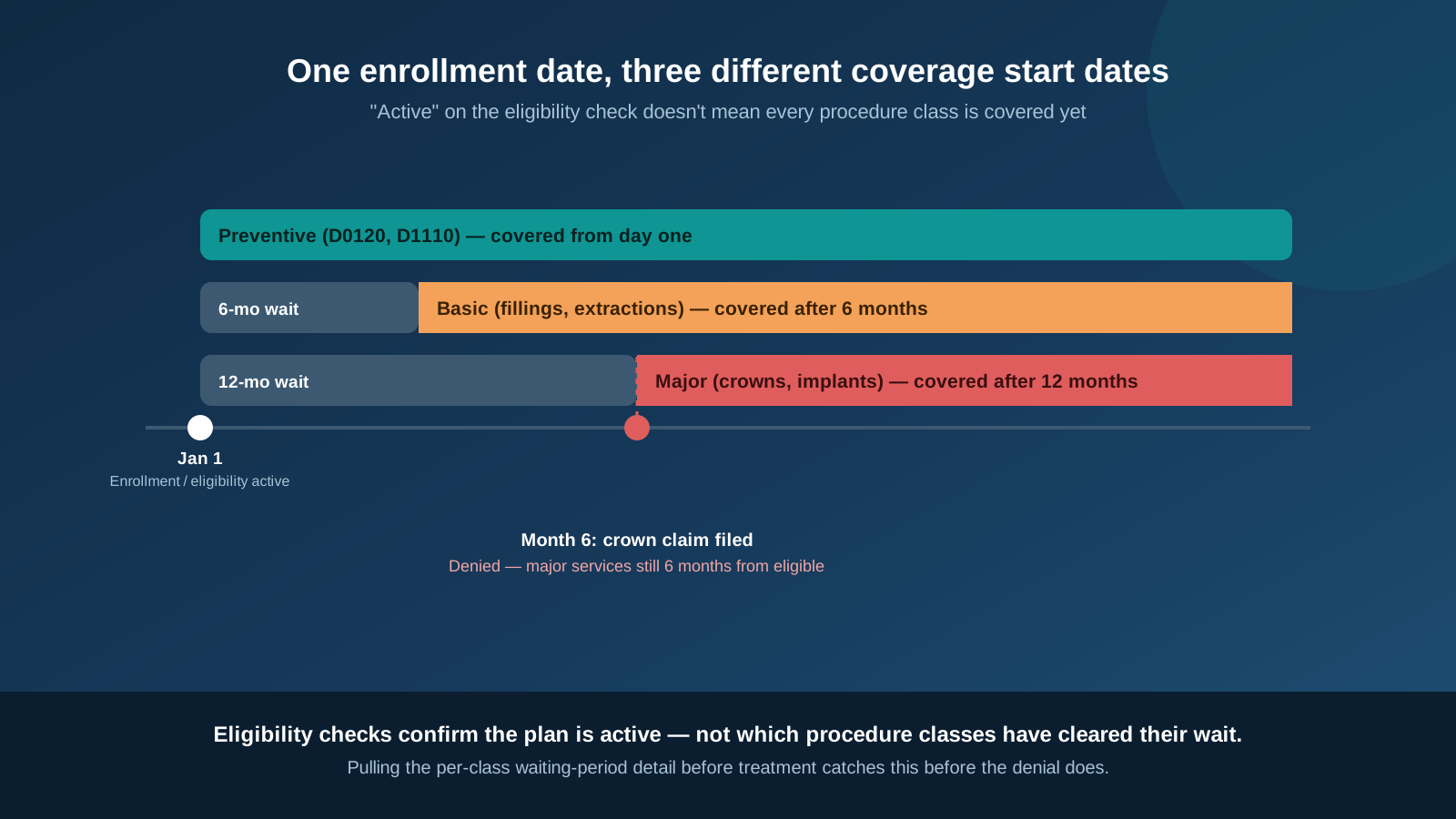
Waiting Periods in Dental Insurance: Why "Active" Doesn't Mean "Covered Today"
An eligibility check can confirm a plan is active while a specific procedure class is still months from being covered. Here's how waiting periods are structured and how to catch it before treatment.
Read the article →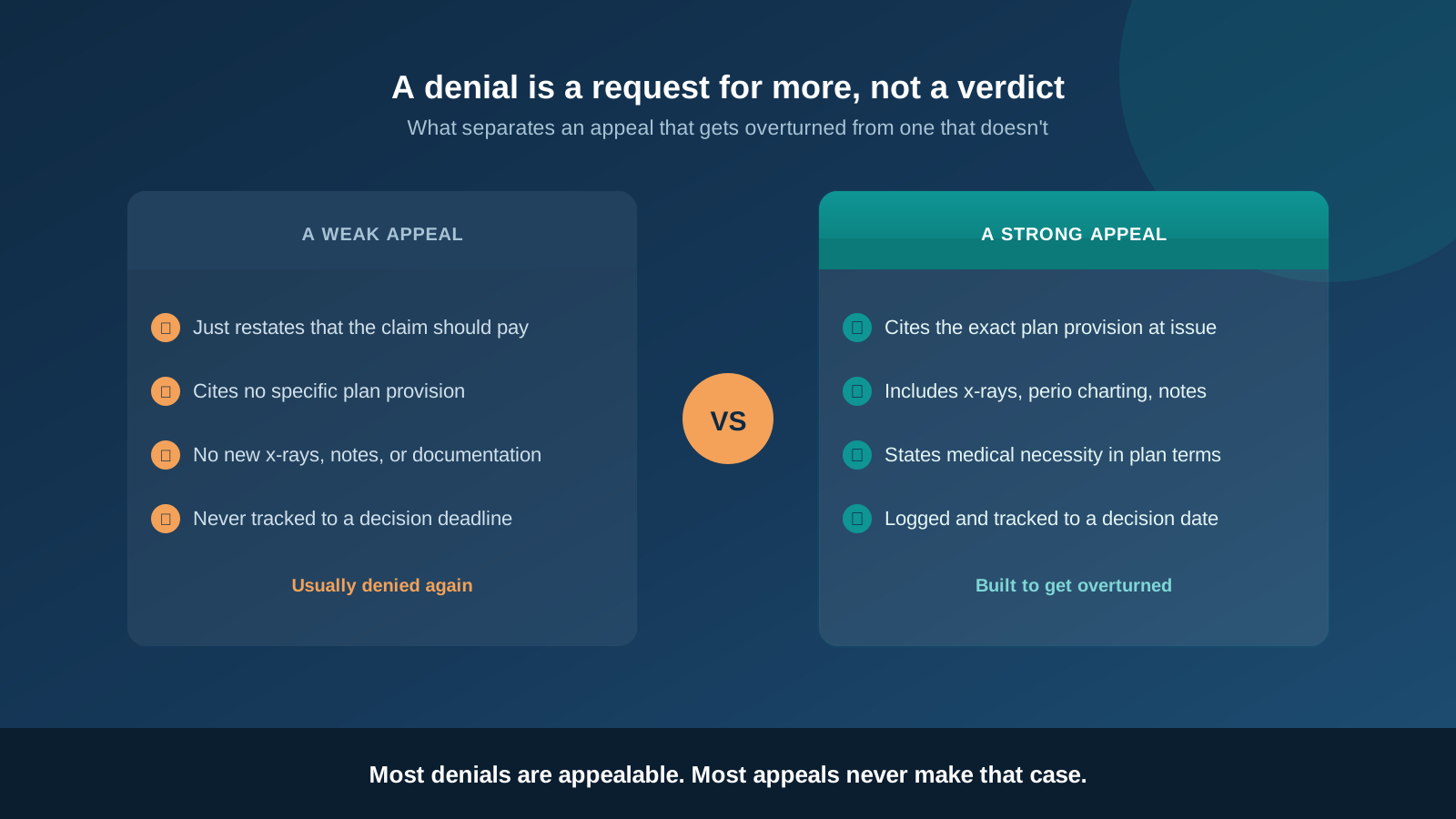
Dental Insurance Claim Appeals: How to Turn a Denial Into a Payment
Most dental claim denials aren't final decisions — they're a request for more information. Here's what separates an appeal that gets overturned from one that goes nowhere.
Read the article →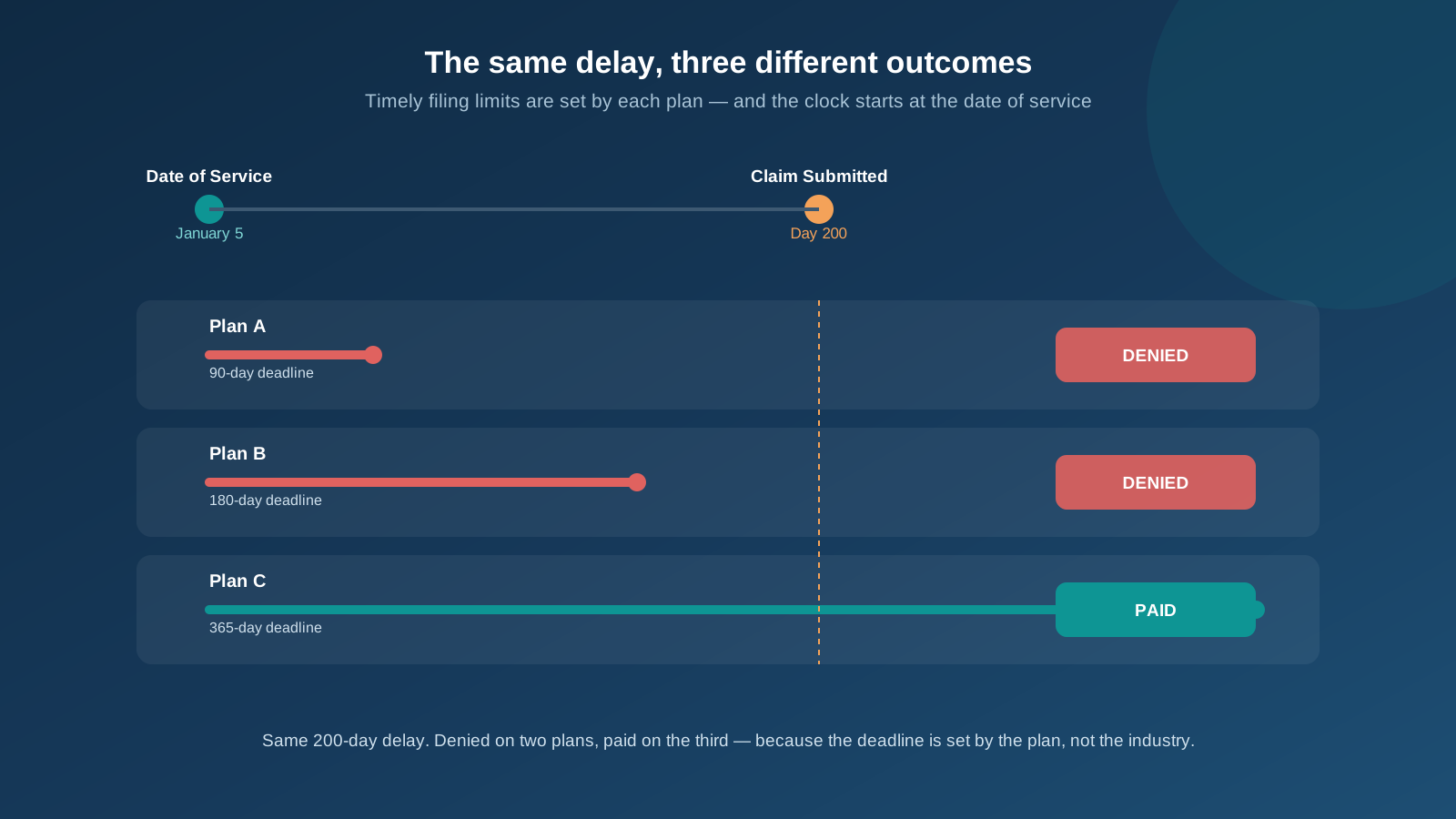
Timely Filing Limits: How a Clean Claim Still Gets Denied for Being Late
Filing deadlines range from 90 days to a full year depending on the carrier, and the clock starts on the date of service. Here's where claims quietly age past it and how to prove one was filed on time.
Read the article →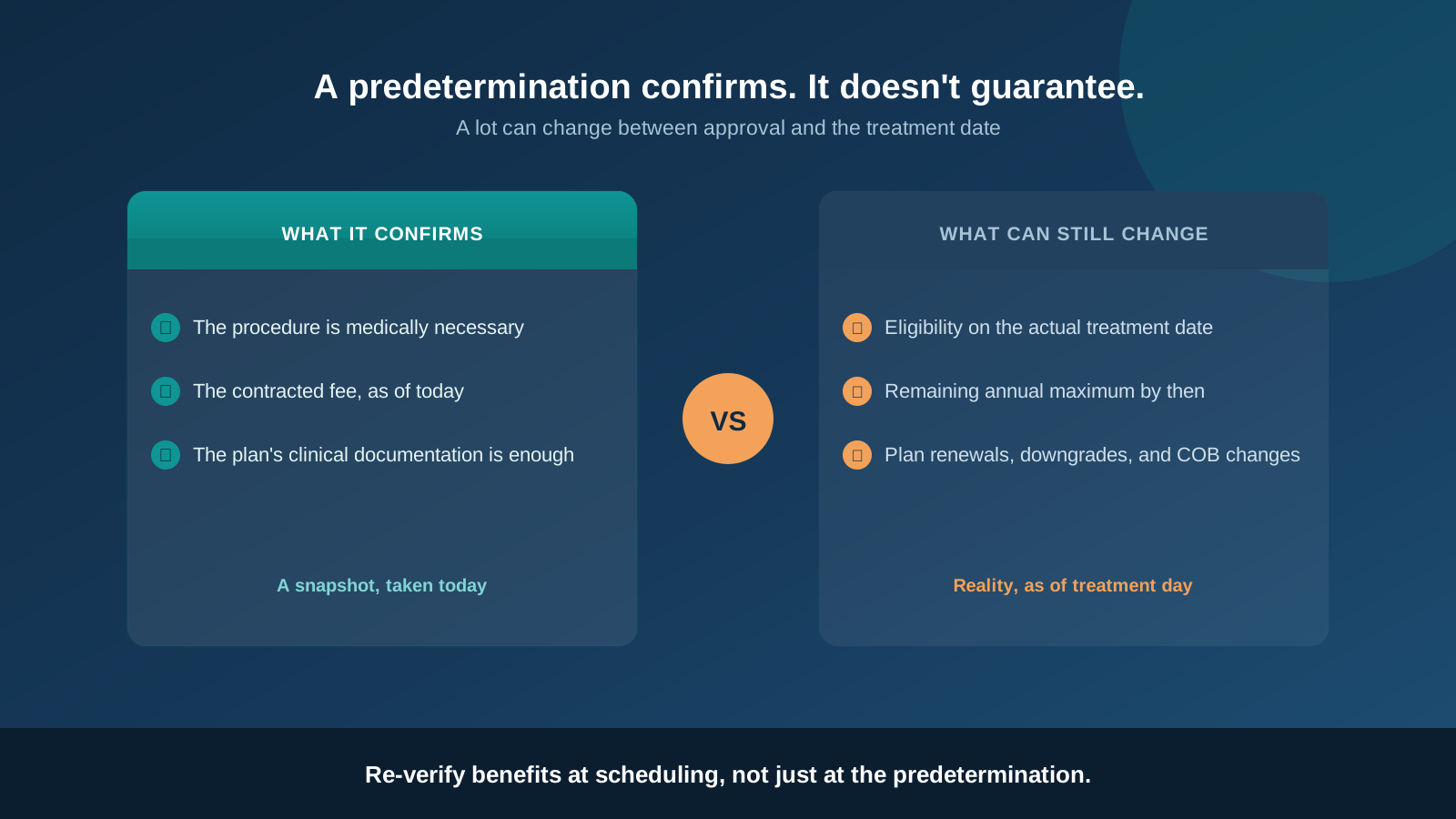
Predetermination of Benefits: Why a Pre-Approval Still Isn't a Guarantee of Payment
An approved predetermination confirms medical necessity and today's contracted fee — it doesn't lock in eligibility, remaining annual maximum, or plan terms as of the actual treatment date. Here's where that gap opens up.
Read the article →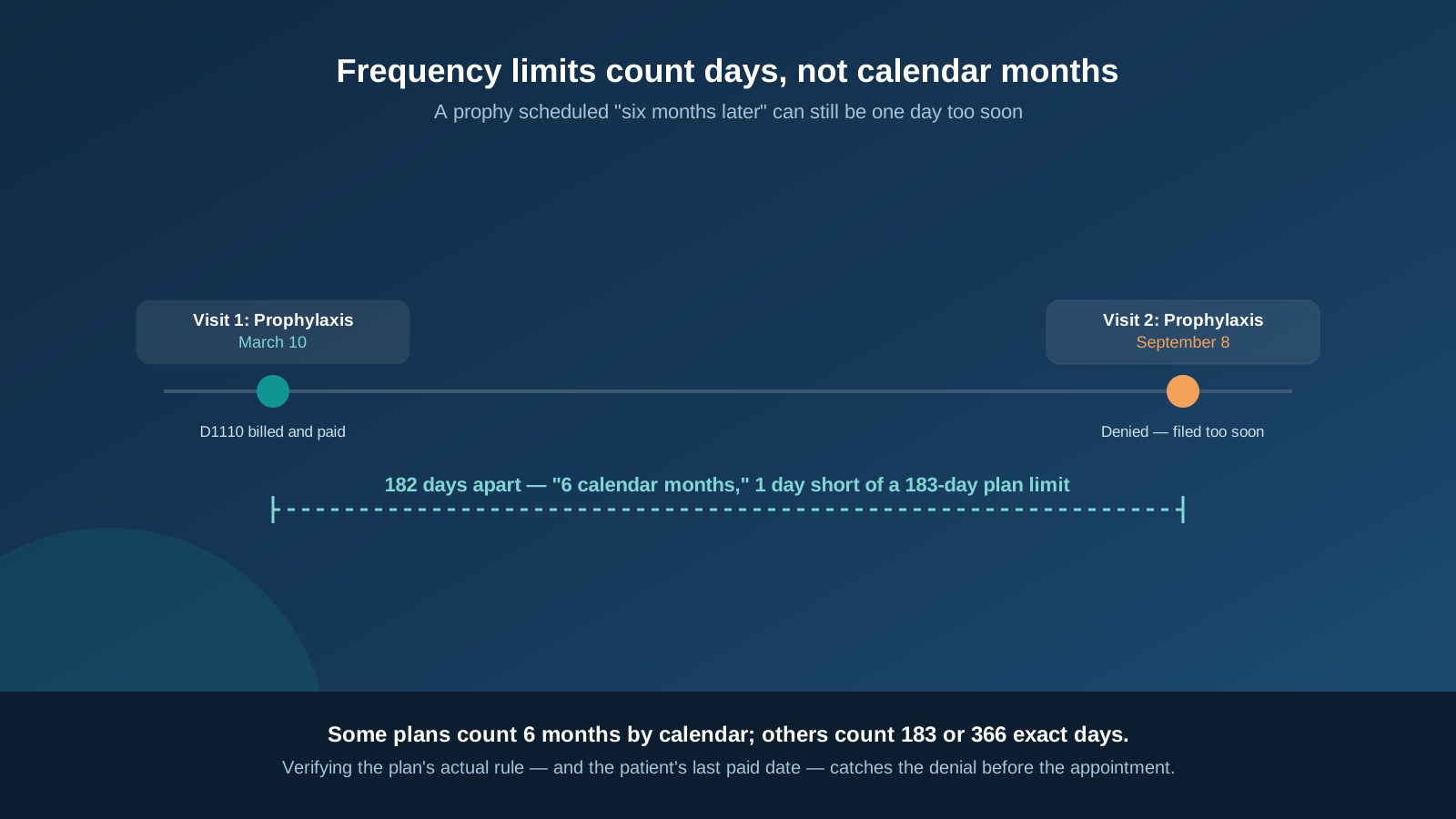
Frequency Limitations: Why a Covered Procedure Still Gets Denied
A cleaning or bitewing set scheduled almost exactly six months out can still deny for frequency — because "6 months" doesn't mean the same thing on every plan. Here's how the count actually works and how to verify it before the visit.
Read the article →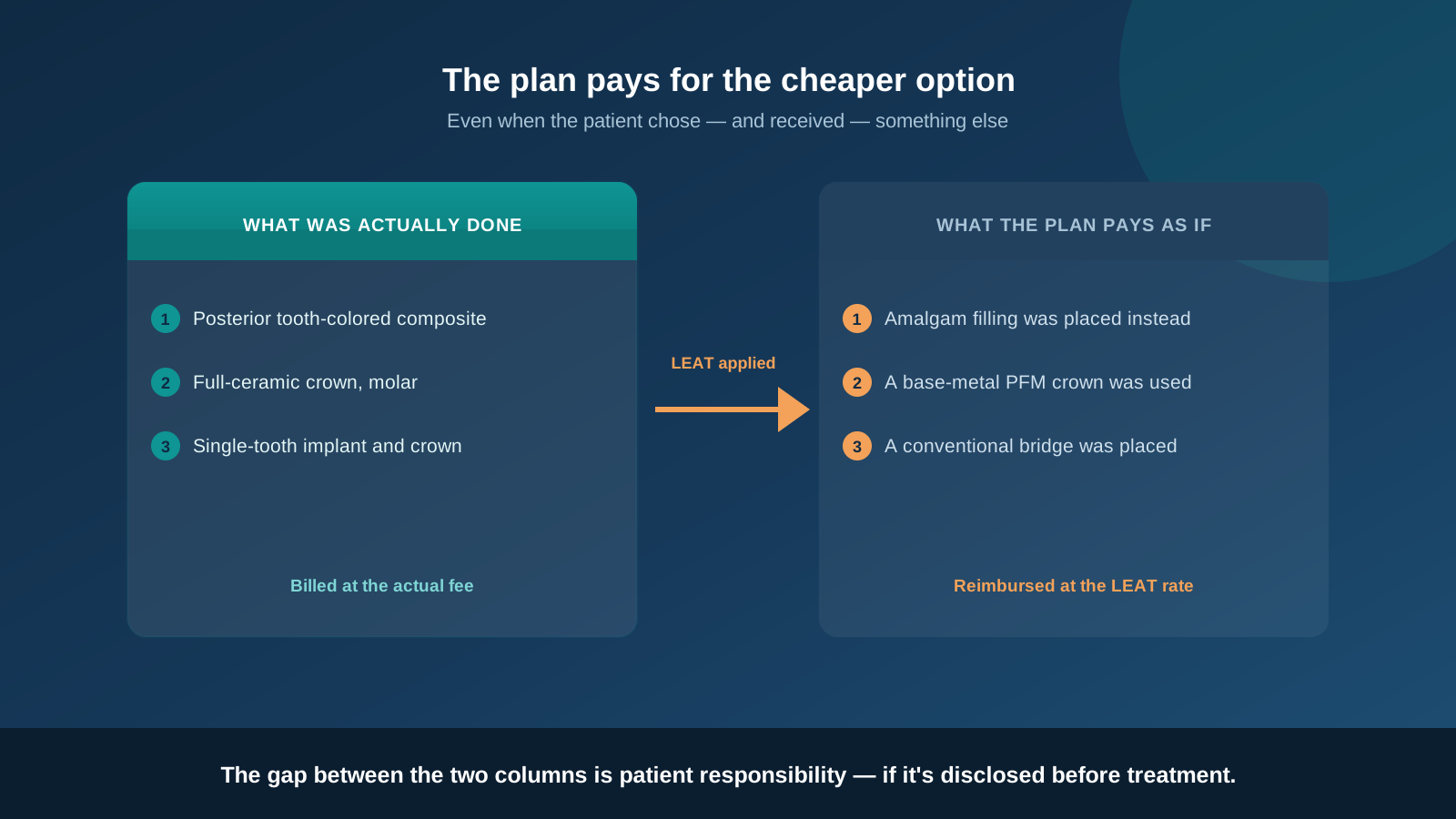
The Alternate Benefit Clause: Why Insurance Paid for the Cheaper Treatment You Didn't Do
A composite filling, ceramic crown, or implant can be reimbursed as if the cheapest clinical alternative had been done instead. Here's how the alternate benefit clause works and how to disclose the difference before treatment.
Read the article →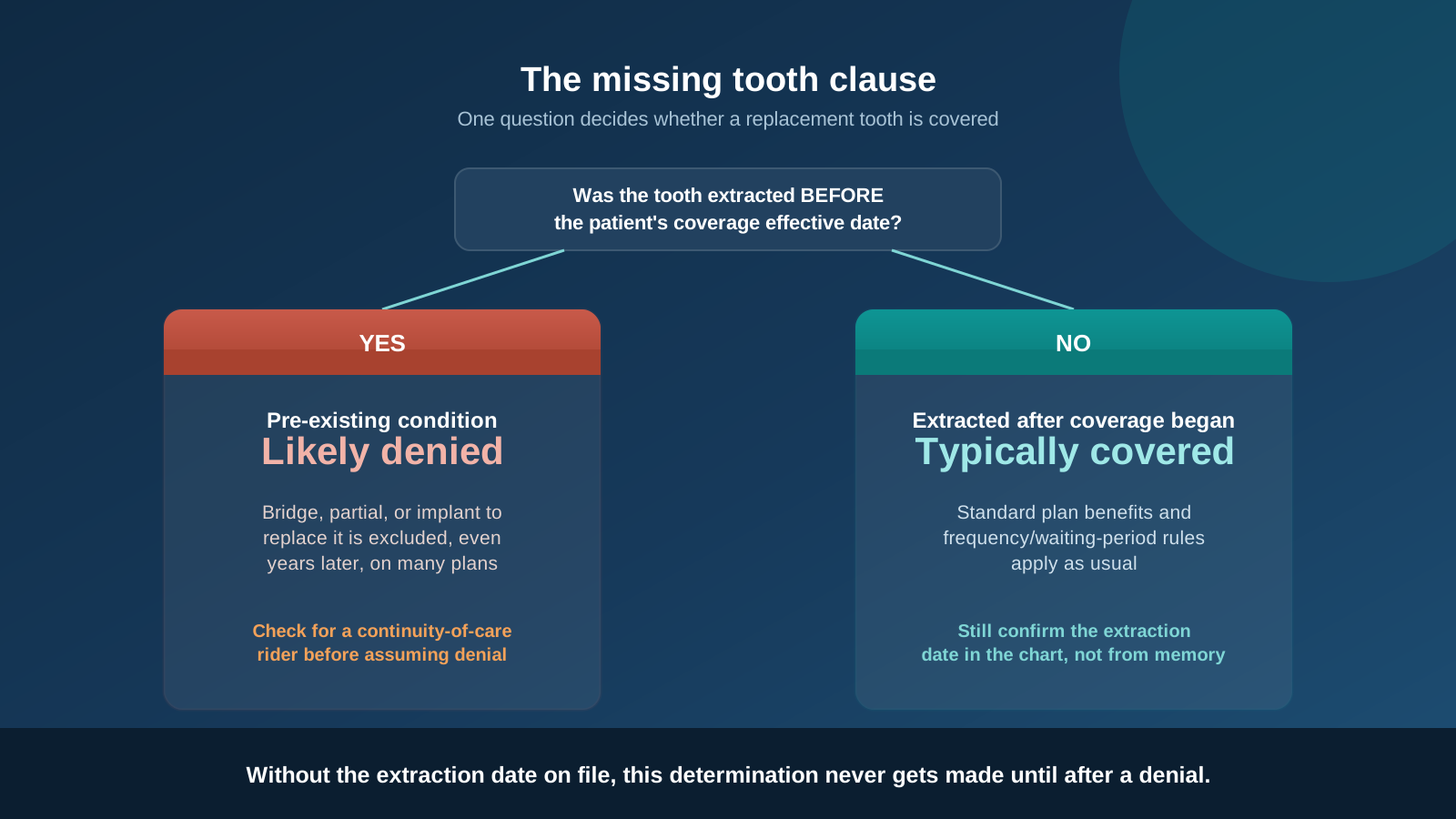
The Missing Tooth Clause: Why a Decades-Old Extraction Can Still Deny Today's Claim
A bridge, partial, or implant can be denied as a pre-existing condition if the tooth was extracted before the patient's coverage started — even decades earlier. Here's how to verify it before treatment, not after.
Read the article →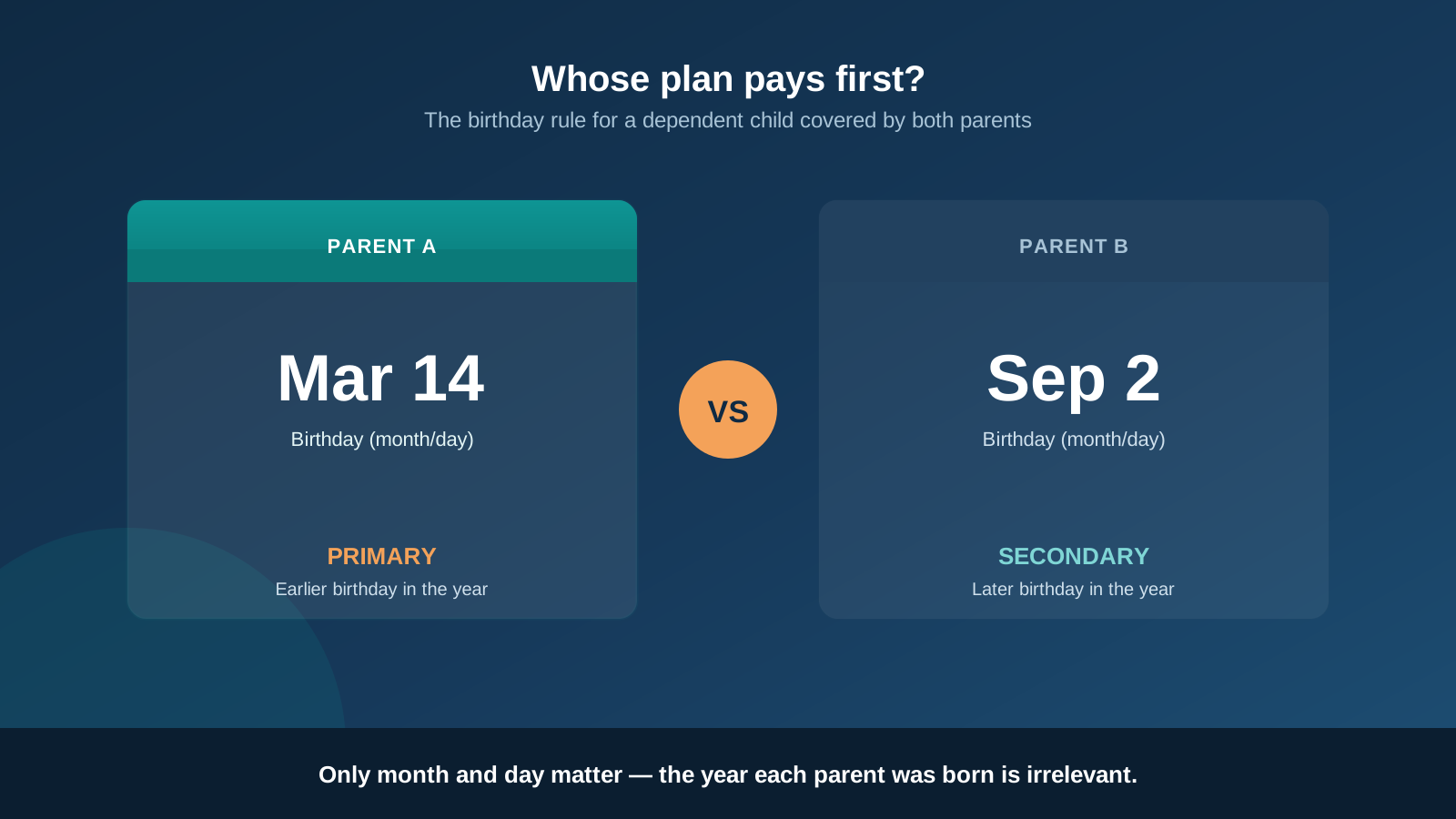
Coordination of Benefits: How to Stop Losing Money on Dual-Coverage Dental Claims
Whoever bills second without the right COB process usually gets paid the least — or not at all. Here's how primary/secondary determination actually works and where dual-coverage claims stall out.
Read the article →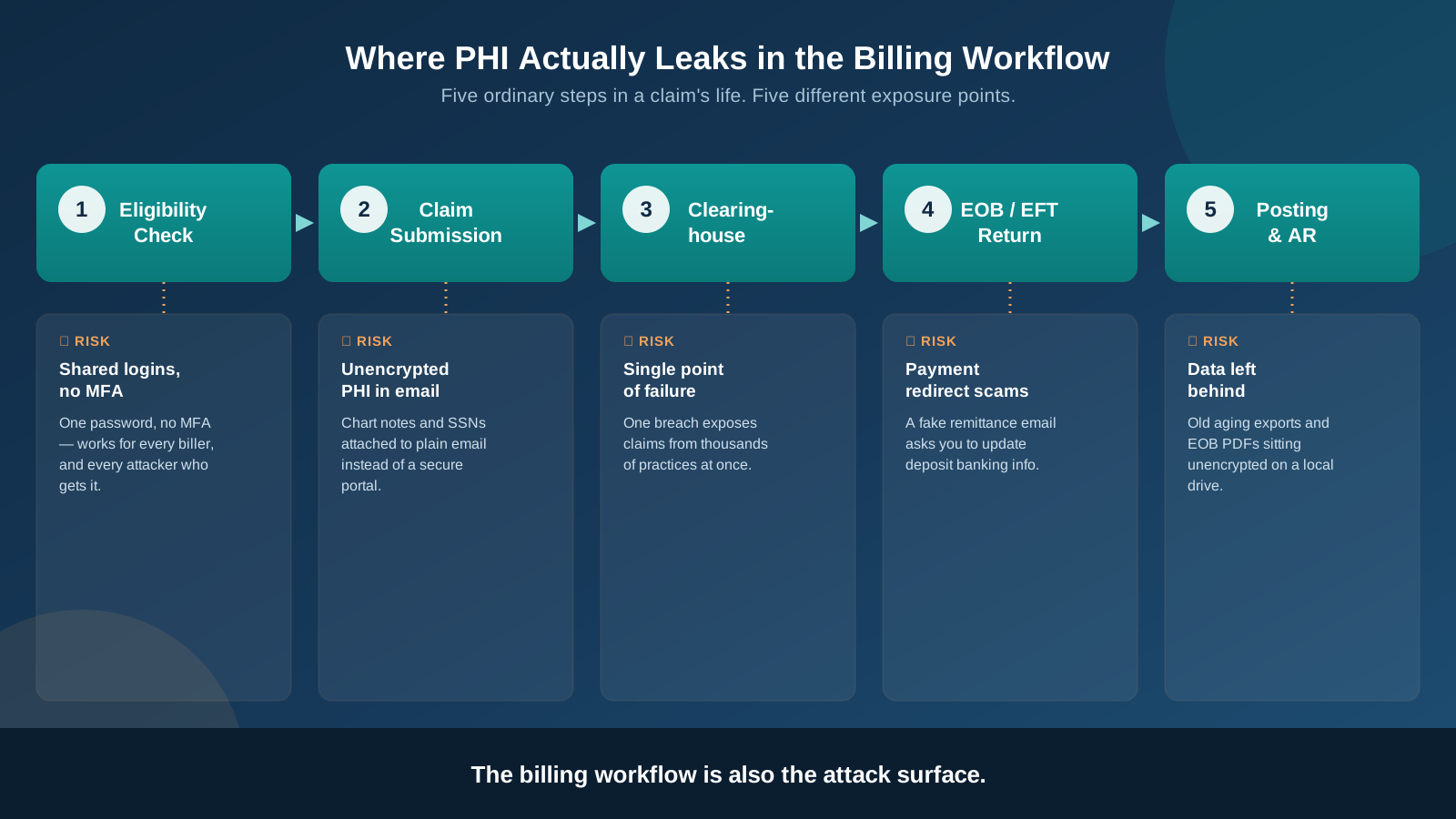
Cybersecurity in Dental Billing: Where Patient Data Actually Leaks
Eligibility checks, claim submission, clearinghouses, EOB returns, payment posting — every step of the billing workflow touches PHI, and each one has a different, specific way it can be exposed.
Read the article →
Why Payment Posting Is the Most Overlooked Job in Your Dental Office
Auto-posting matches a payment to a claim. It doesn't verify the payment is correct — and that gap is where downgrades, bundling, and bad write-offs quietly cost practices money.
Read the article →
Plan Effective Date vs. Member Effective Date: Why Your Eligibility Check Might Be Wrong
There are actually two different effective dates on many insurance plans, and most eligibility portals only show you one of them — which is how a "verified" claim ends up denied for a missed waiting period.
Read the article →Ready to stop chasing claims?
Book a free consultation with our team. We'll review your aging report together and show you exactly what we can recover — no obligation, no pressure.
Book Your Free Consultation